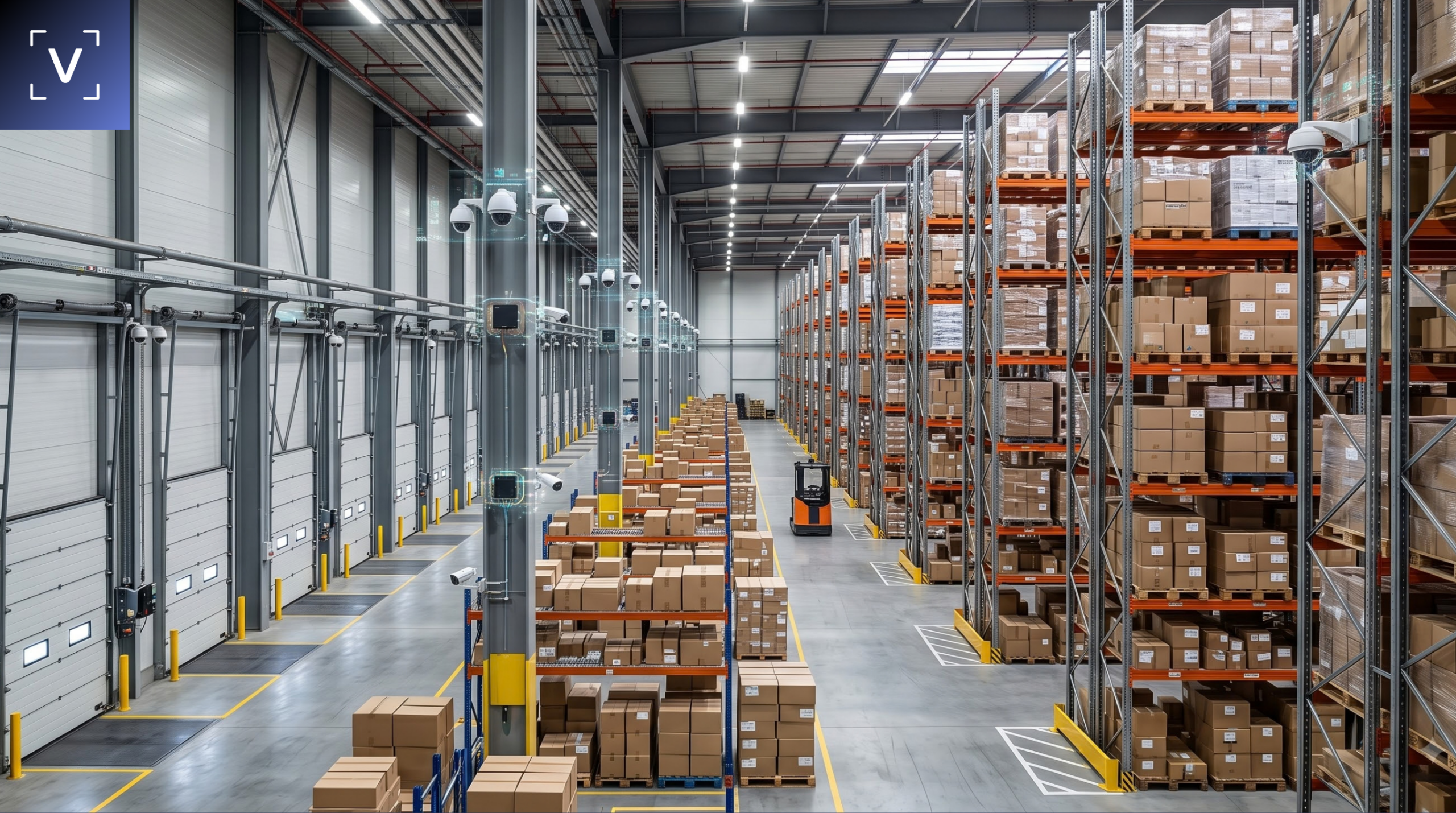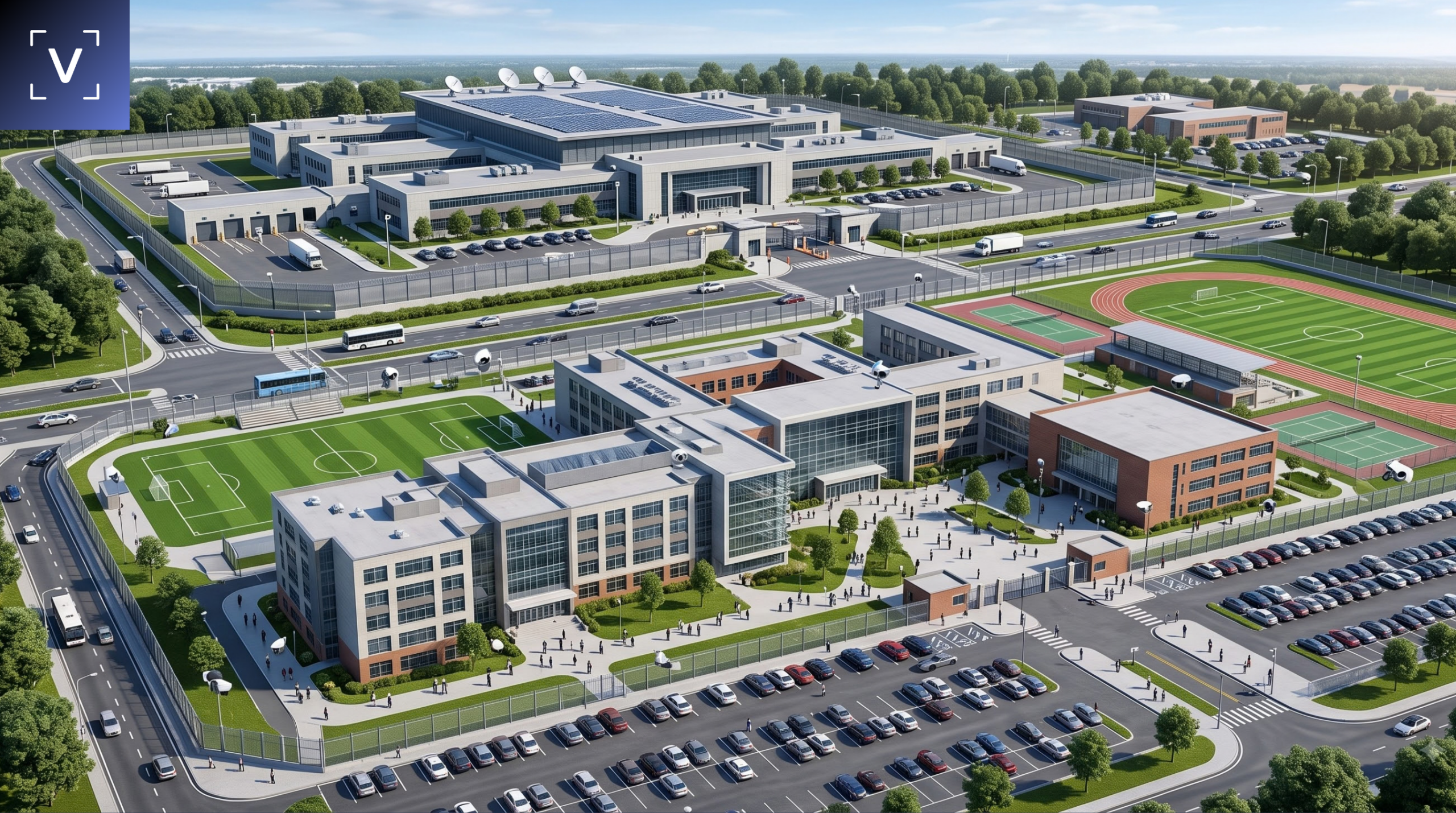


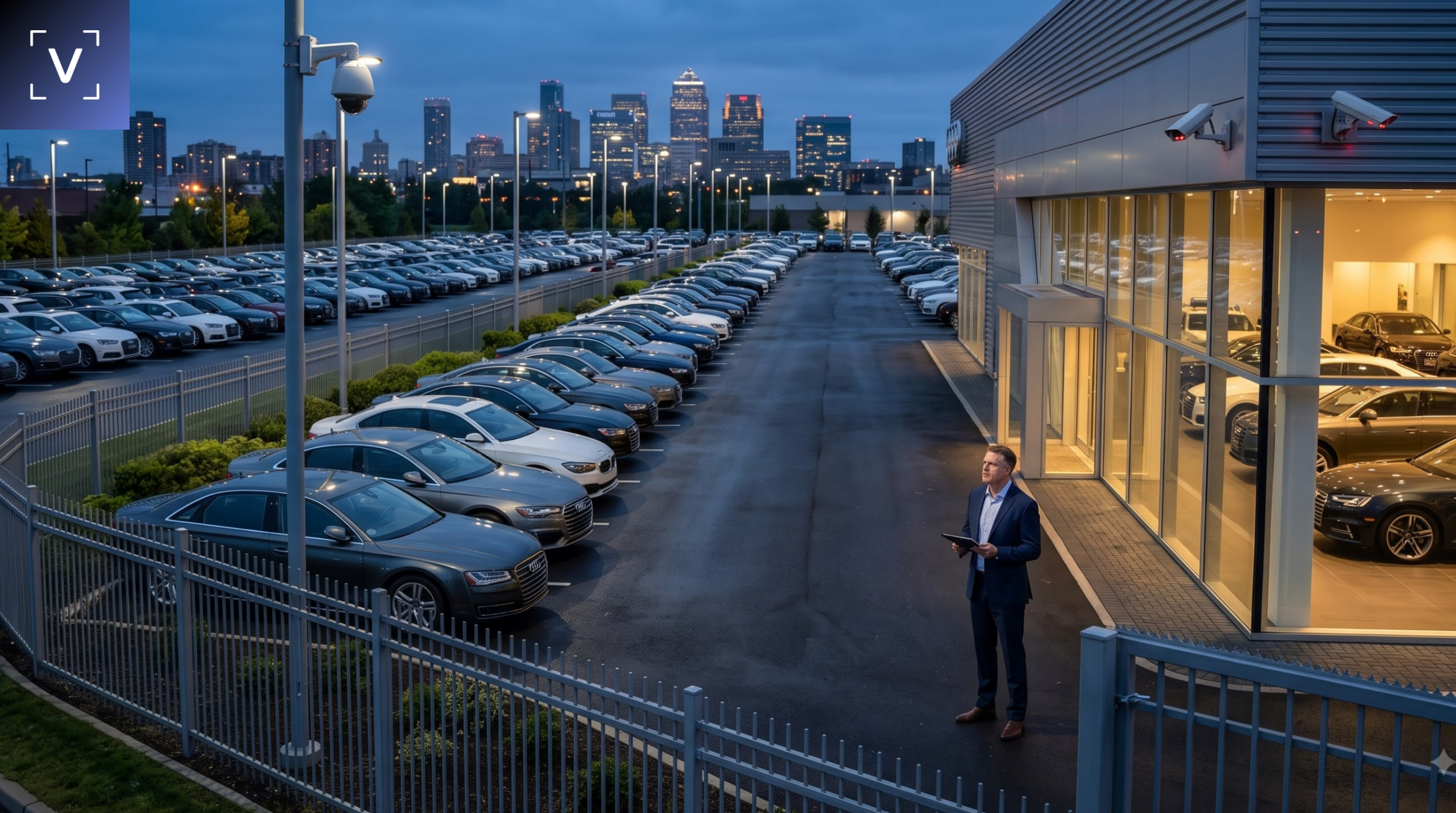

The commercial real estate sector is rapidly changing, bringing new security challenges for managing office buildings, retail centers, warehouses, mixed-use developments, and large commercial properties. Traditional security methods that rely heavily on physical security personnel and passive CCTV recording systems are becoming increasingly costly and less effective at preventing incidents.
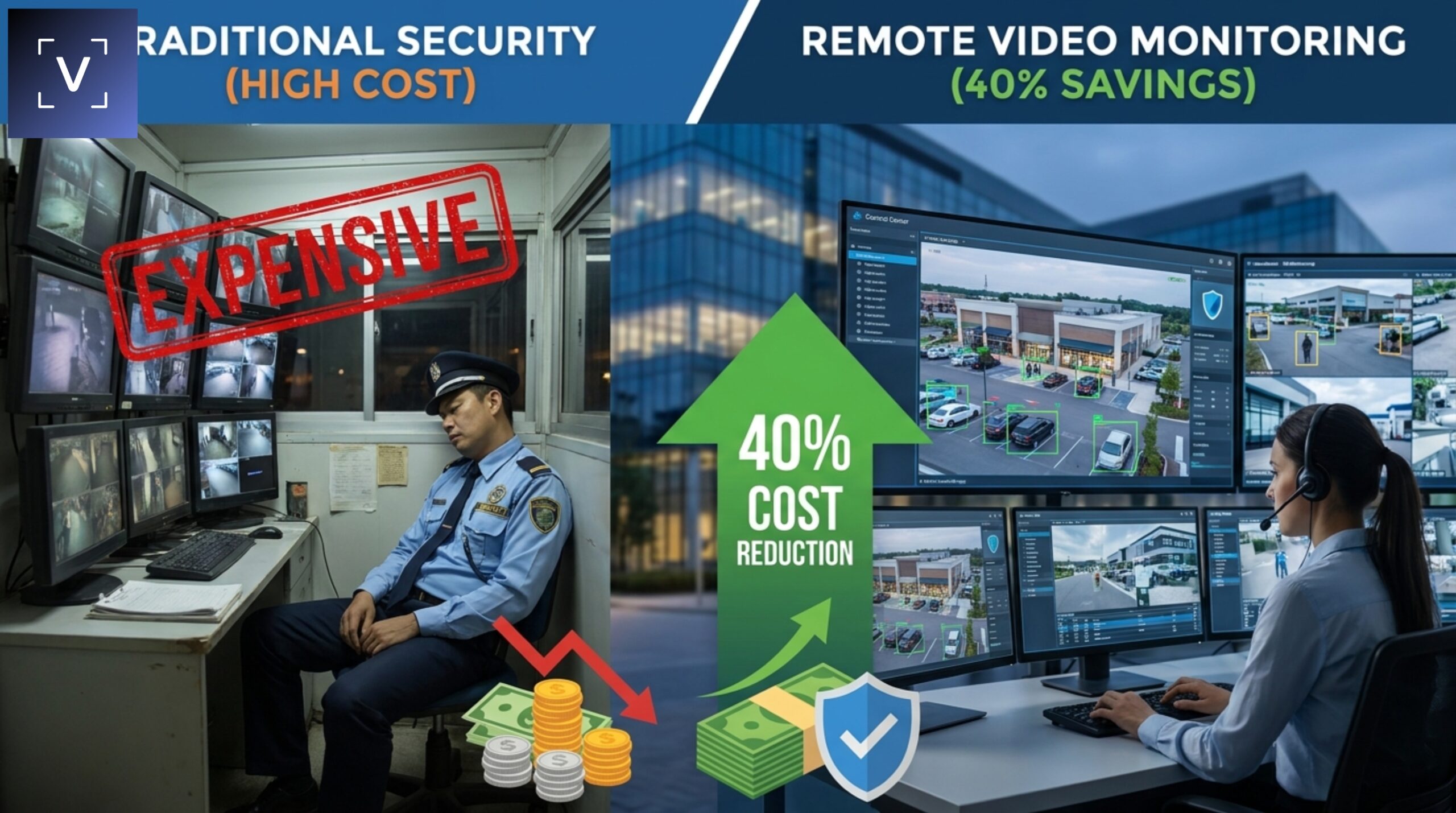
To enhance security while managing operational expenses, many commercial property owners are turning to AI-driven remote video monitoring technologies. These advanced systems enable businesses to lower overall security costs by up to 40%, while also improving response times and safeguarding assets.
As labor costs increase and security threats grow more complex, remote video monitoring is emerging as a more intelligent and scalable strategy for securing commercial properties.
Historically, commercial properties have depended on on-site guards, patrols, and standard CCTV to secure their premises. While these methods still have value, they come with several operational and financial drawbacks.
Traditional CCTV mainly records footage for later review. Often, incidents such as theft, vandalism, trespassing, or unauthorized access are only identified after damage has occurred.
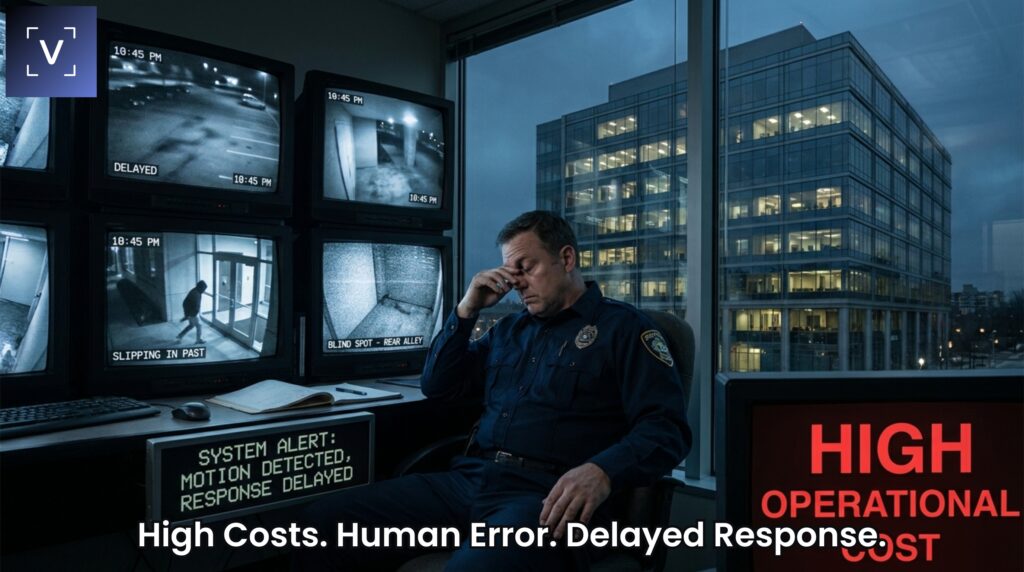
Furthermore, maintaining 24/7 on-site security coverage across parking areas, entry points, and communal spaces can be prohibitively expensive. Staffing shortages, overtime costs, inconsistent monitoring, and human error add further strain on property owners.
For companies managing multiple commercial sites, achieving centralized oversight and uniform security operations becomes even more difficult.
These challenges are driving demand for smarter, more proactive security solutions.
Remote video monitoring is a sophisticated surveillance approach that integrates AI analytics, live camera feeds, cloud technology, and human oversight to detect and respond to threats actively.
Unlike traditional CCTV that only records activity, remote monitoring continuously analyzes video streams to identify suspicious behaviors such as the following:
When unusual activity is detected, trained monitoring personnel can promptly verify the situation and take appropriate action. This may include issuing live voice warnings, alerting on-site teams, escalating incidents to management, or contacting law enforcement if needed.
This proactive method helps prevent incidents before they escalate into costly damages or liabilities.
A major benefit of remote video monitoring is the reduction in costs.
Traditional security models require multiple guards working in shifts across various sections of a property. Remote monitoring enables centralized security teams to oversee multiple locations simultaneously using AI-enhanced surveillance.
This drastically reduces reliance on large on-site security forces while maintaining continuous observation and swift response.
Commercial real estate owners achieve savings through:
For extensive commercial property portfolios, these savings can combine to reduce security costs by as much as 40%.
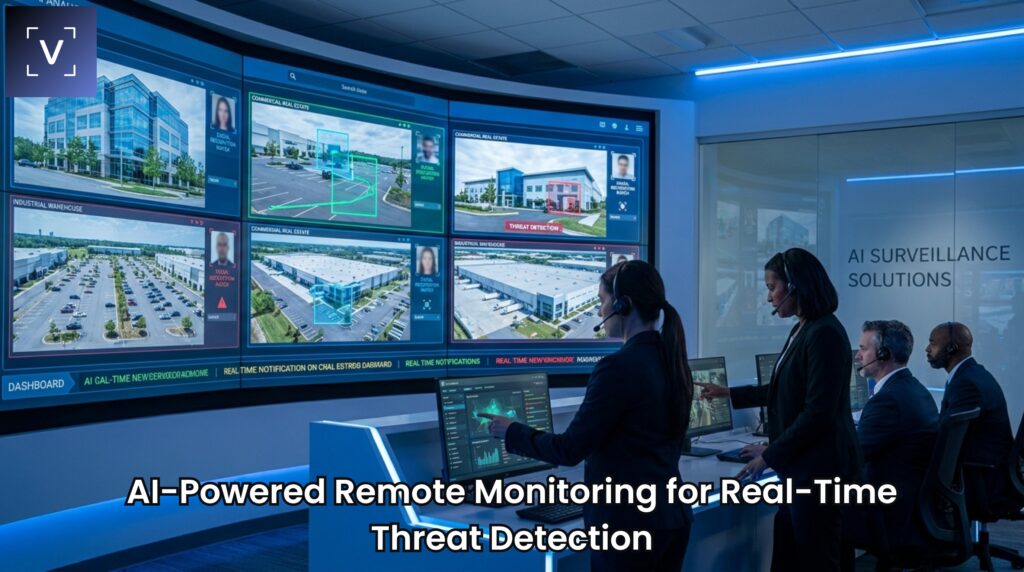
Speed is crucial in protecting commercial properties. Delayed reactions can cause financial losses, operational disruptions, and tenant dissatisfaction.
AI-powered remote monitoring systems instantly detect suspicious activities and send real-time alerts. This allows monitoring teams to respond immediately rather than discovering incidents hours later through recorded footage.
Advanced systems can quickly identify:
In many cases, live voice warnings alone can deter criminal acts before damage occurs.
This rapid response enhances overall property security and creates a safer environment for tenants, staff, and visitors.
Commercial real estate firms often manage numerous buildings and facilities spread across different areas. Securing each property with traditional methods can be operationally complex and expensive.
Remote video monitoring offers a centralized, scalable solution.
Cloud-based platforms allow property managers to:
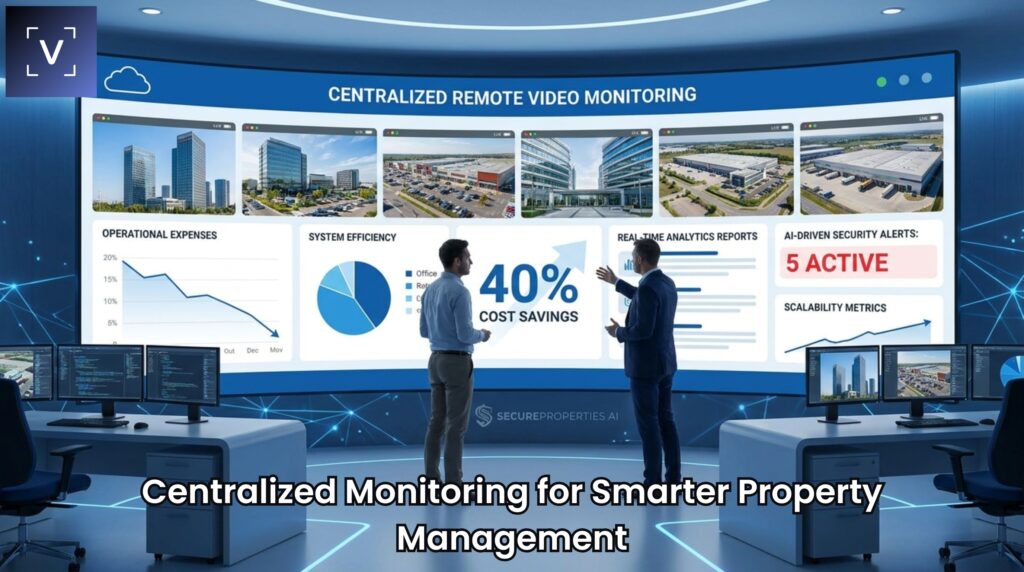
Artificial intelligence has shifted surveillance from passive recording to intelligent threat detection.
AI systems analyze behavior patterns, spot unusual movement, and filter out false alarms in real time. This reduces unnecessary alerts and enables security teams to focus solely on verified threats.
Modern remote monitoring solutions also deliver operational insights that help improve building safety, efficiency, and the tenant experience.
Commercial real estate owners face growing pressure to enhance security while controlling costs. Traditional security models no longer meet the demands of today’s complex environment.
Remote video monitoring offers a smarter, more proactive approach by combining AI analytics, live monitoring, rapid responses, and centralized management.
By lowering labor costs, preventing incidents, and increasing operational transparency, these systems help commercial property owners cut security expenses by up to 40% while providing stronger protection for their properties, tenants, and assets.