





Managing security across multiple business locations has become increasingly complex in 2026. Organizations operating retail chains, warehouses, manufacturing facilities, commercial properties, logistics hubs, healthcare facilities, and educational campuses face growing challenges in maintaining consistent security standards across geographically dispersed sites.
To address these challenges, businesses are increasingly adopting security surveillance cameras, video surveillance systems, and cloud-connected CCTV monitoring services that provide centralized visibility and control. Traditional security models often require separate monitoring systems at each location, creating operational inefficiencies, delayed responses, and limited oversight.
Today, cloud-based security platforms are transforming how organizations manage security video surveillance by allowing security teams to monitor multiple sites from a single centralized location. Combined with AI surveillance cameras, intelligent analytics, and remote monitoring capabilities, cloud-based security operations are helping businesses improve threat detection, reduce costs, and enhance operational efficiency.
As organizations continue expanding across multiple locations, cloud security infrastructure is becoming an essential component of modern surveillance and monitoring strategies.
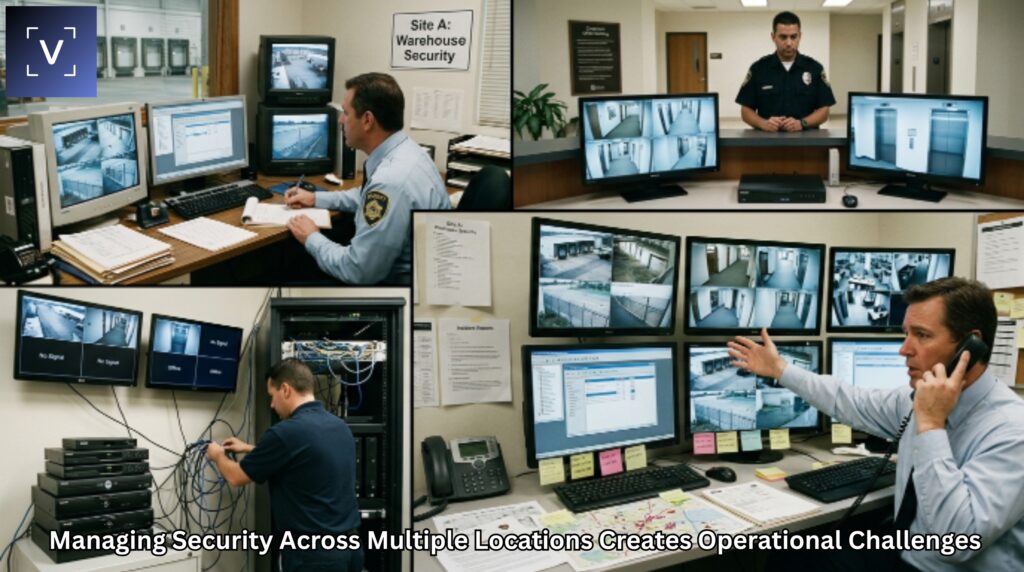
Multi-site businesses often struggle with maintaining consistent security operations across numerous facilities.
Common challenges include:
Traditional CCTV surveillance systems often operate independently at each site, making it difficult for security teams to maintain centralized oversight.
As organizations grow, these fragmented security environments become increasingly difficult to manage effectively.
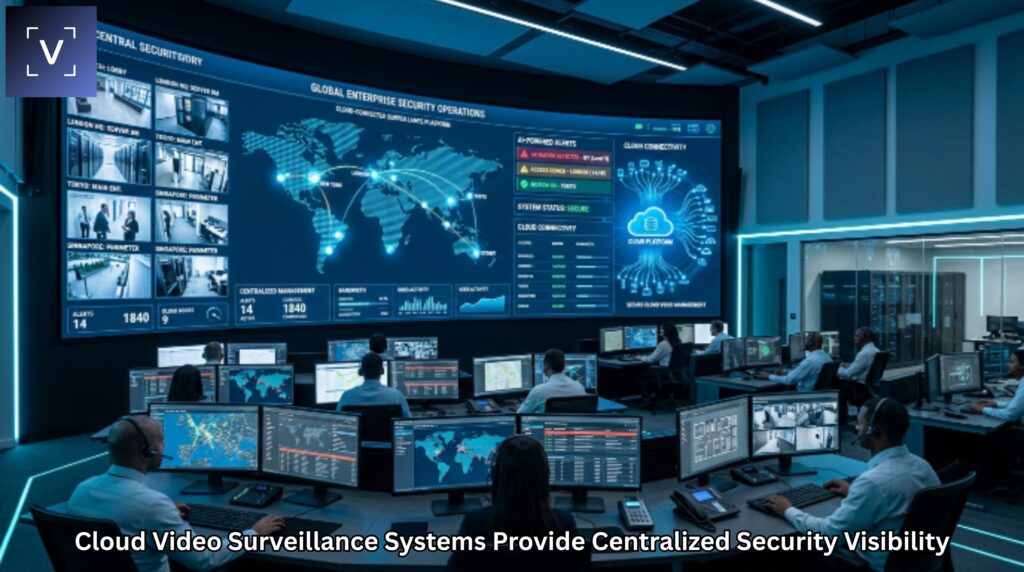
Modern video surveillance systems powered by cloud technology allow organizations to access and manage security operations from virtually anywhere.
Unlike traditional on-premise systems, cloud-connected security surveillance systems provide:
Security teams can monitor multiple facilities simultaneously while maintaining consistent security standards across all locations.
This centralized visibility improves operational awareness and enables faster decision-making.
Cloud-based security platforms become even more powerful when combined with AI surveillance cameras and intelligent video analytics.
AI-powered monitoring can automatically detect:
Instead of relying on manual monitoring, organizations receive real-time alerts whenever unusual activity is detected.
This allows security teams to focus on verified incidents while improving overall threat detection accuracy.
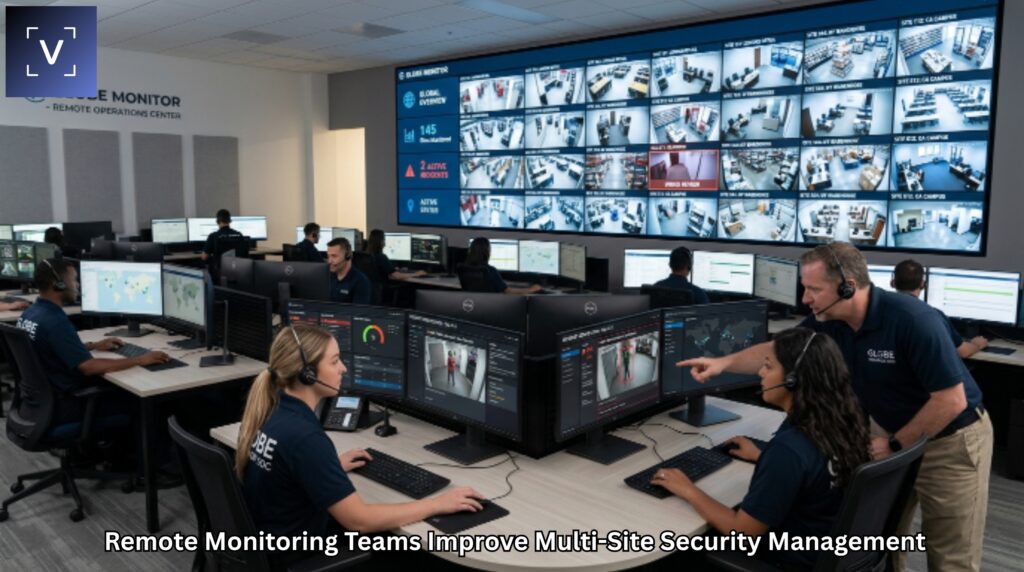
One of the biggest benefits of cloud-based security is the ability to support professional CCTV monitoring services across multiple locations.
Remote monitoring centers can:
This approach reduces dependence on large on-site security teams while improving security effectiveness.
For organizations managing dozens or even hundreds of locations, centralized monitoring provides significant operational advantages.
Traditional surveillance infrastructure often requires expensive hardware, local storage systems, and dedicated maintenance at each site.
Cloud-based video monitoring systems help organizations reduce:
As businesses grow, cloud security platforms can easily scale to accommodate additional locations without major infrastructure investments.
This flexibility makes cloud surveillance particularly attractive for expanding enterprises.
As businesses continue adopting digital technologies, cloud-based security operations are becoming the new standard.
Organizations are increasingly investing in:
These technologies help organizations move beyond fragmented security environments and create unified, proactive protection strategies.
Additionally, cloud-based security platforms are helping organizations improve collaboration between security teams, facility managers, and business leadership. With centralized dashboards and real-time reporting capabilities, stakeholders can access critical security information from any location, enabling faster decision-making and improved incident management. This level of visibility is especially valuable for organizations operating across multiple regions where maintaining consistent security standards can be challenging.
Another major advantage of cloud surveillance is enhanced data accessibility and business continuity. Security footage, incident records, and system logs can be securely stored and accessed when needed, reducing the risks associated with hardware failures or on-site storage limitations. This allows organizations to maintain uninterrupted security operations while ensuring important evidence remains available for investigations, audits, and compliance requirements.
Cloud-based surveillance also supports future technology integration, allowing businesses to adopt new security capabilities without significant infrastructure changes. As AI analytics, automation, and remote monitoring technologies continue to evolve, organizations can easily expand their security ecosystem while maintaining centralized control. This adaptability helps businesses stay ahead of emerging security threats and operational challenges, making cloud-connected surveillance a long-term investment that delivers both security improvements and operational efficiency across all locations.
Managing security across multiple locations has become increasingly challenging for modern organizations.
Traditional CCTV surveillance systems often create operational silos that limit visibility and reduce efficiency.
By combining cloud-based video surveillance systems, AI surveillance cameras, and CCTV monitoring services, businesses can centralize security operations, improve threat detection, reduce costs, and strengthen protection across every location.
As organizations continue expanding in 2026, cloud-based security operations are becoming a critical foundation for modern surveillance and risk management.