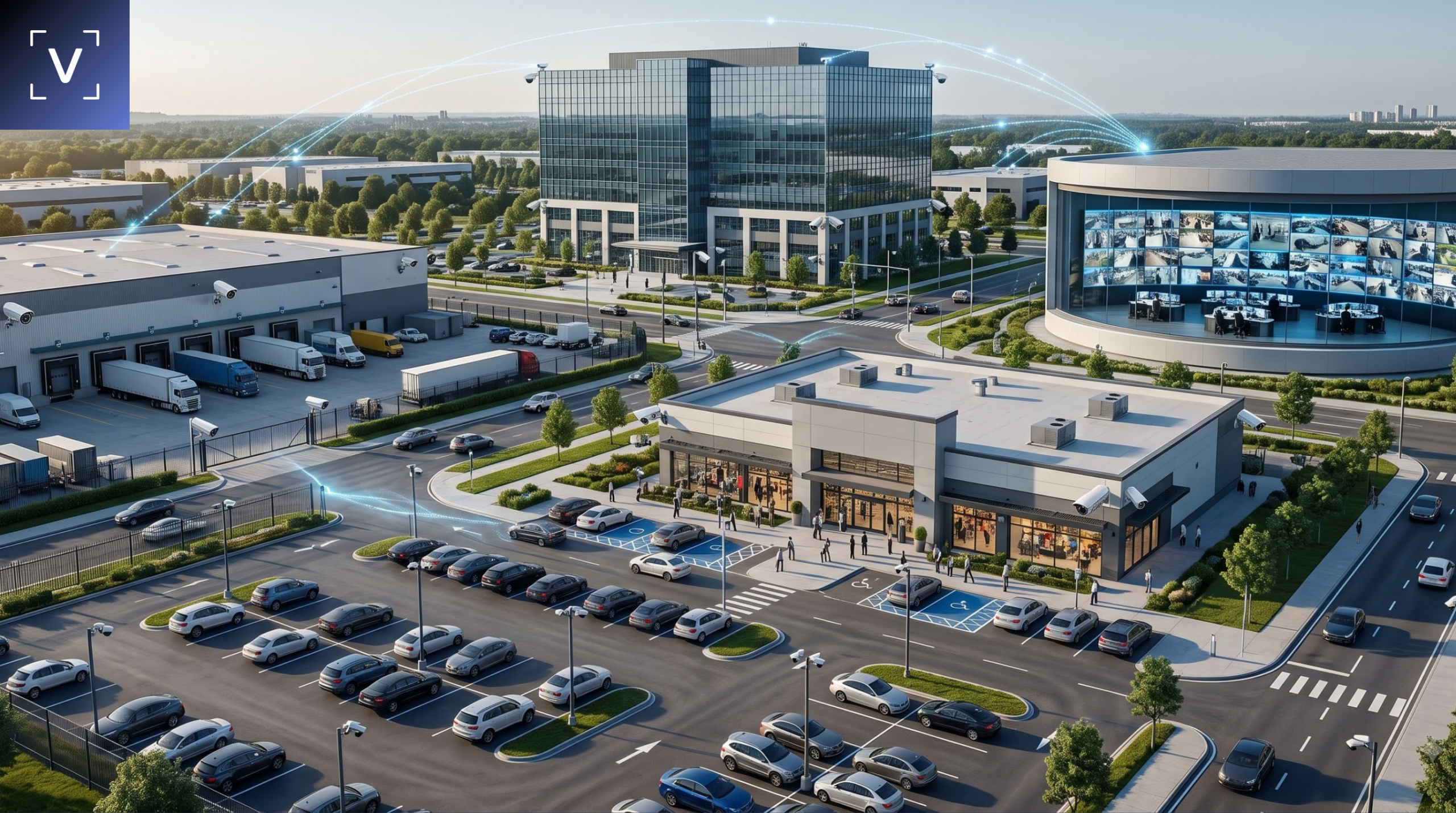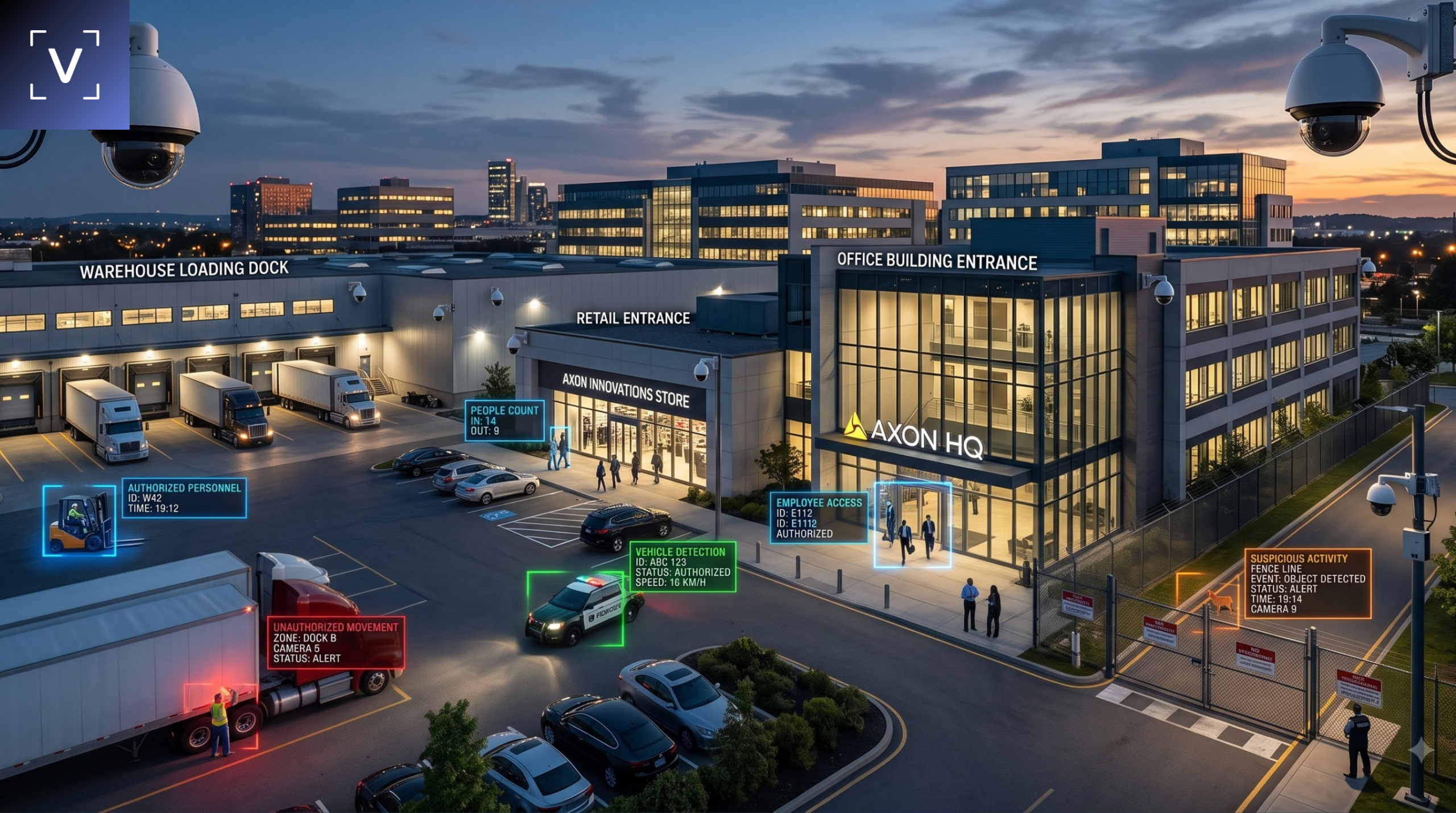



School campuses and government buildings face a security challenge that traditional video surveillance can struggle with: security teams may have hundreds of camera feeds but limited time to watch them continuously.
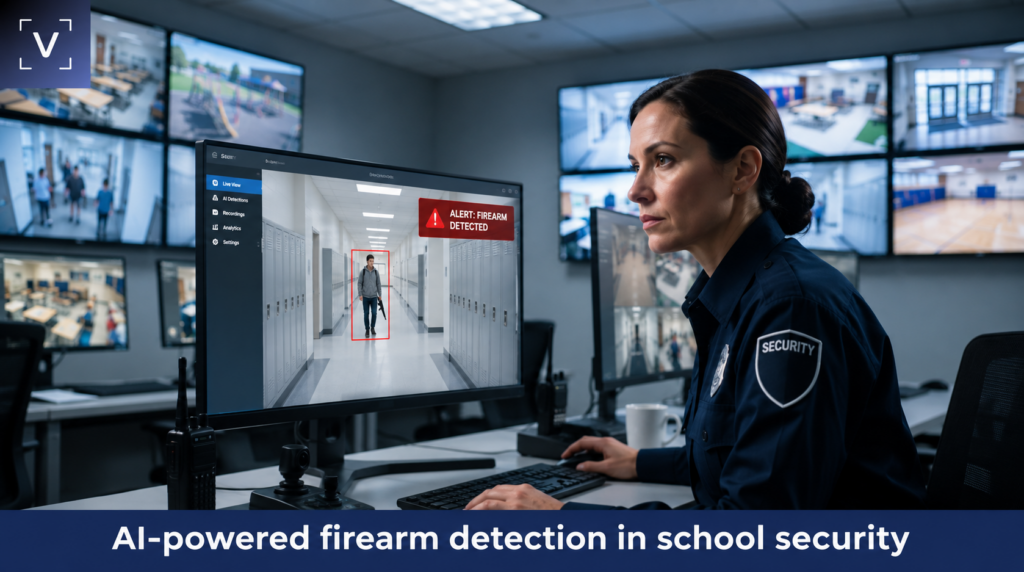
AI-powered gun detection adds another layer by analysing camera footage for visible firearms and sending alerts when a potential weapon is detected. Unlike traditional CCTV, where an operator may need to notice an event manually, AI video analytics can help bring potentially critical activity to the operator’s attention in real time.
For schools and government facilities, the technology is becoming part of a broader security strategy that combines cameras, access control, communications, and established emergency procedures.
AI-powered gun detection uses computer vision and video analytics to identify the visual presence of firearms in camera footage.
This is different from gunshot detection. Gunshot detection systems listen for the sound of a firearm being discharged, while visual gun detection looks for a firearm appearing within a camera’s field of view.
The distinction matters because visual detection can potentially alert security teams before a weapon is fired. However, these systems should be treated as an additional detection layer rather than a replacement for trained security personnel and established emergency procedures.
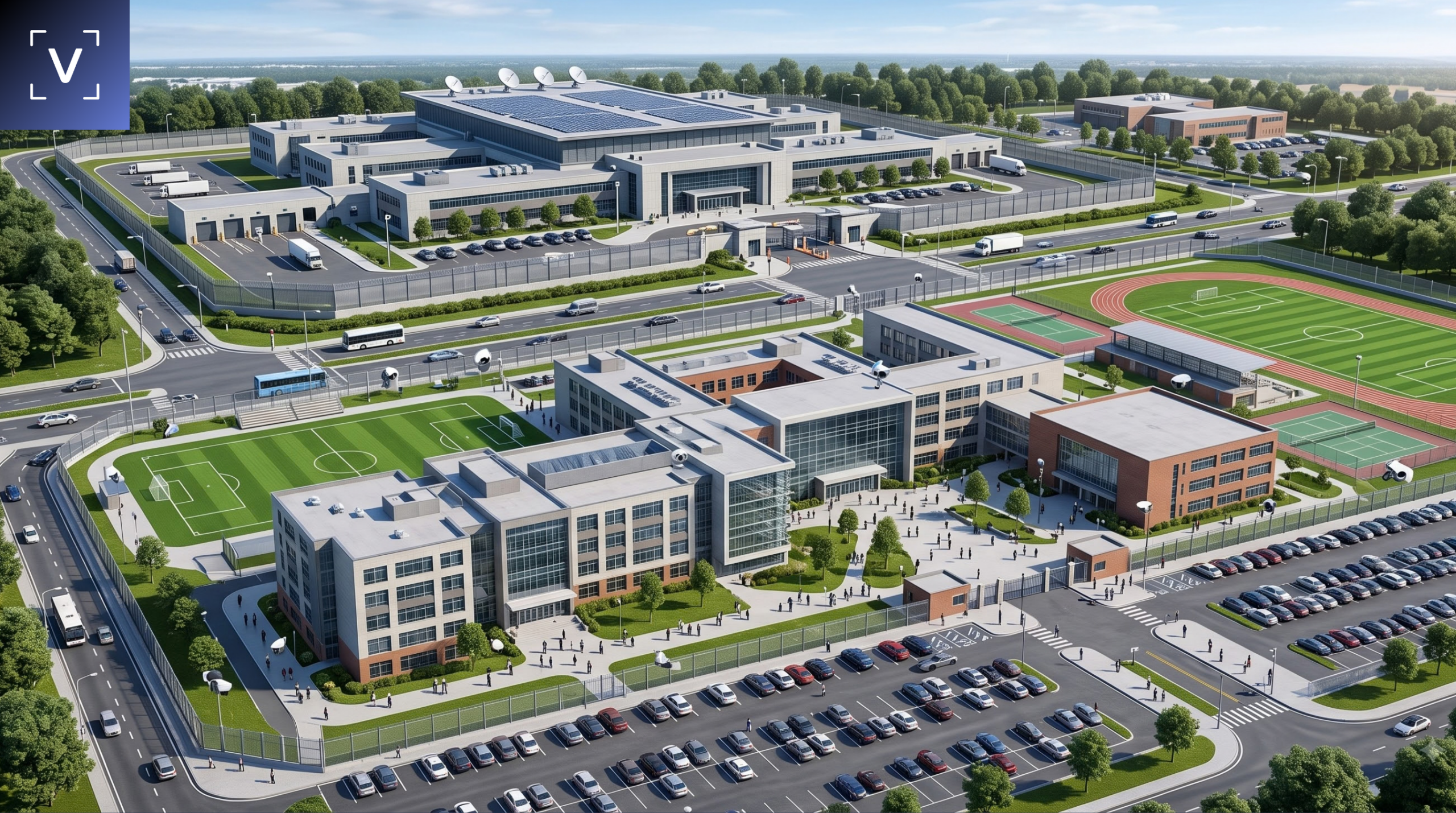
Large school campuses can have classrooms, hallways, entrances, parking areas, athletic facilities, and outdoor spaces spread across multiple buildings.
Monitoring all these areas manually can be difficult. AI video analytics can help security teams focus their attention on events that require investigation rather than continuously watching every camera feed.
For example, Hamilton Township School District has deployed more than 550 AI-powered cameras across its school sites, including visible firearm detection technology. The district says the system helps automatically alert security personnel to potential threats while reducing the amount of time staff spend continuously monitoring feeds.
AI-powered detection works best as part of a layered security model.
A typical workflow can involve:
Some integrated systems can connect visual gun detection with access control and emergency response workflows. For example, Avigilon documents integrations where suspected gun threats are routed for human verification before response actions are initiated
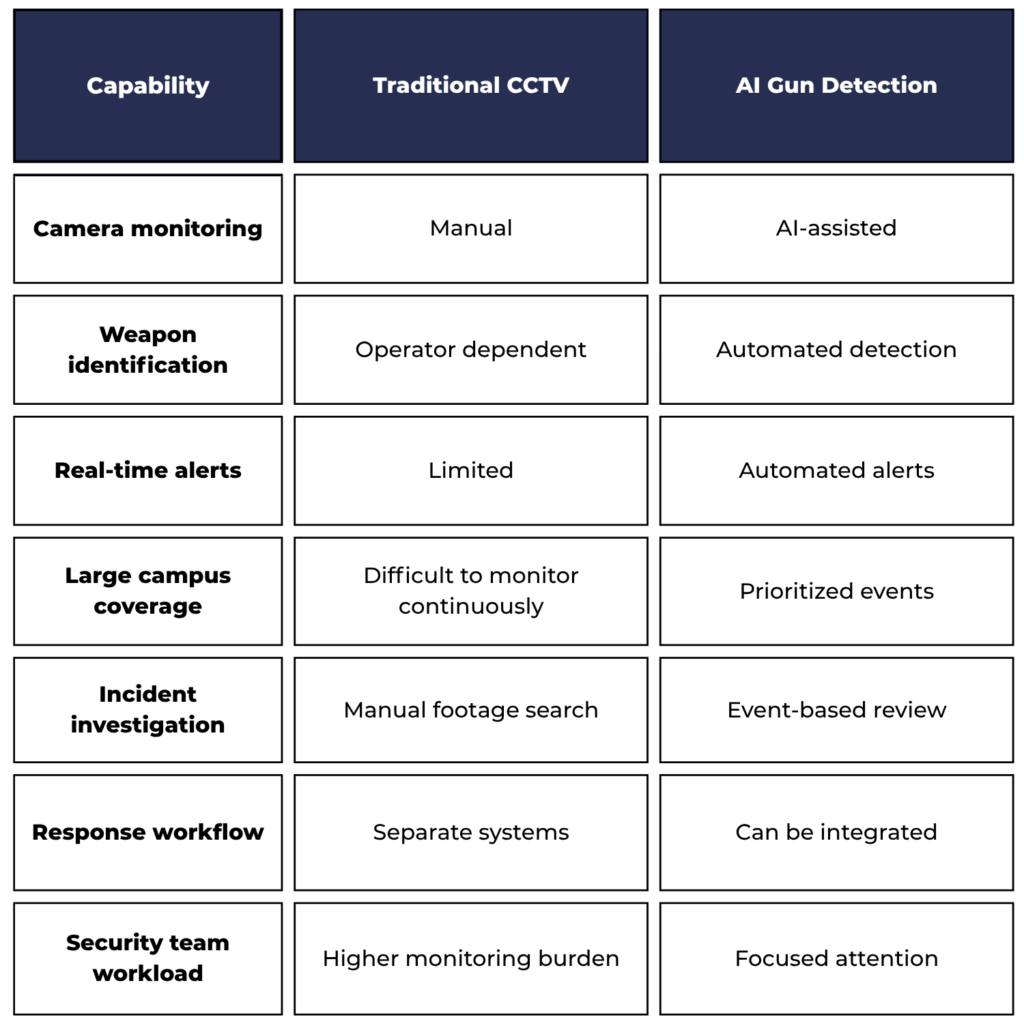
AI detection does not eliminate the need for human verification. A potential weapon alert still needs appropriate review and response based on the facility’s procedures.
The same technology can be applied beyond schools. Government offices, courthouses, public facilities, and other high-traffic buildings can use video analytics as part of a broader physical security system.
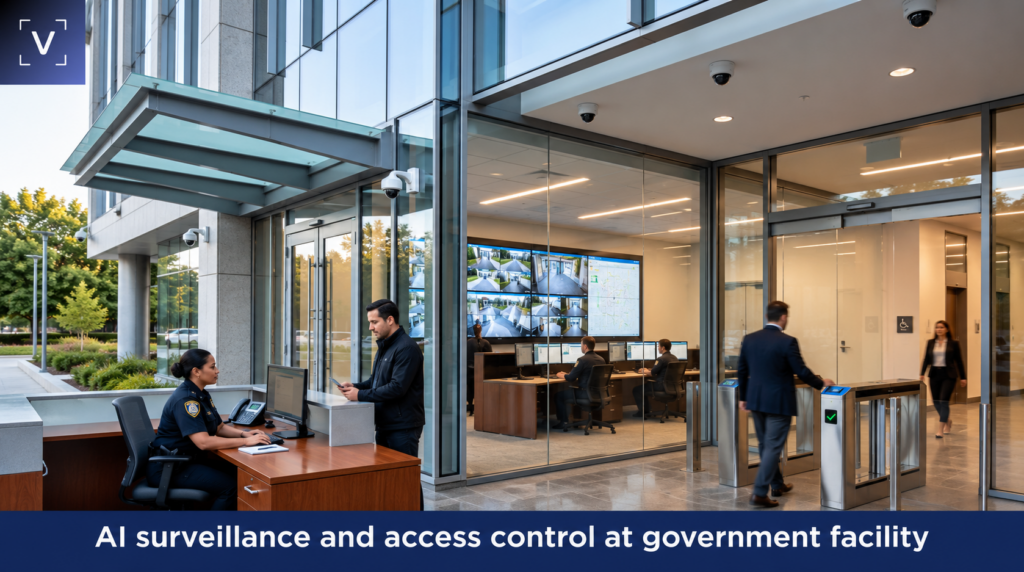
For government environments, integration is particularly important. Camera analytics can work alongside access control, alarms, communications, and other security technologies to give personnel more information during an incident. Some current security platforms specifically combine video analytics with access control and response workflows.
AI-powered surveillance should be deployed carefully, particularly in schools. CISA’s K-12 security guidance notes that camera placement and surveillance practices need to account for civil rights and privacy considerations.
Organisations should also establish clear procedures for alert verification, retention of video footage, access permissions, system testing, and false-alert handling.
The objective is not simply to install more cameras. It is to create a security system that helps personnel identify important events and respond according to established protocols.
In 2026, AI-powered gun detection is becoming an additional tool for schools and government facilities looking to improve situational awareness.
By combining AI video analytics with existing security cameras, access control, communications, and trained personnel, organisations can move from simply recording incidents toward identifying potential threats earlier and directing attention where it is needed.
The technology works best as part of a layered security strategy—not as a standalone replacement for human judgement, emergency planning, or trained security teams.