


Auto dealerships can hold hundreds of vehicles across large outdoor lots, service areas, delivery zones, and customer parking spaces. That makes continuous security difficult with traditional CCTV alone. AI video monitoring can help dealerships identify suspicious activity faster while security teams focus on events that require attention.
Modern video surveillance systems can combine AI video analytics, security surveillance cameras, and remote video monitoring to detect unusual activity around vehicles and restricted areas.
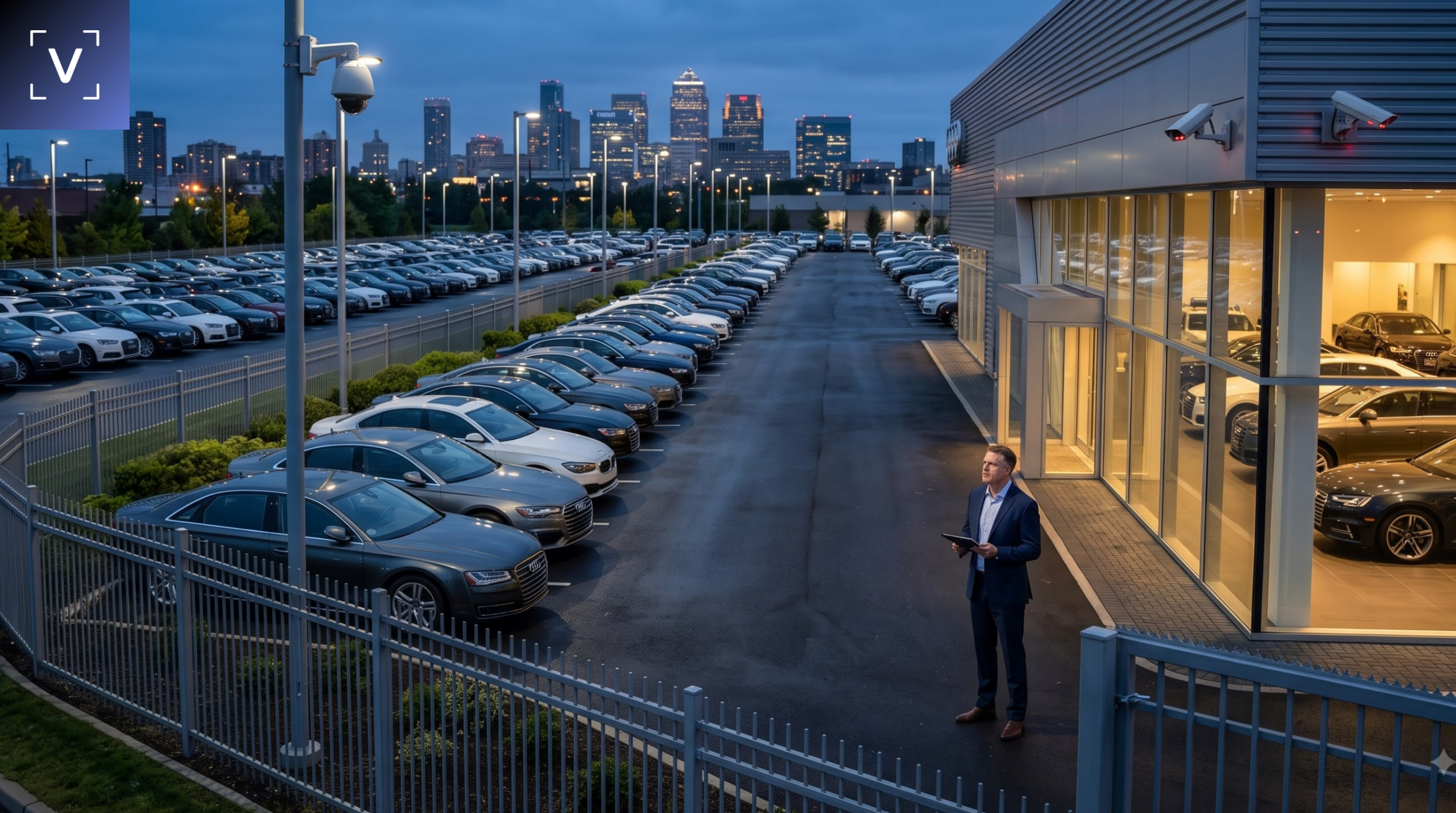
Dealerships have a unique security challenge: valuable vehicles are often displayed outdoors with relatively open access.
A dealership may operate across several acres with dozens or hundreds of vehicles spread across different sections of the property. Monitoring every camera continuously can be difficult, especially overnight
Traditional CCTV can record these events, but identifying them often depends on someone watching or reviewing footage.
AI video monitoring adds automated analysis to existing surveillance infrastructure.
Instead of requiring security personnel to watch every camera continuously, AI video analytics can identify specific events and generate alerts based on predefined rules.
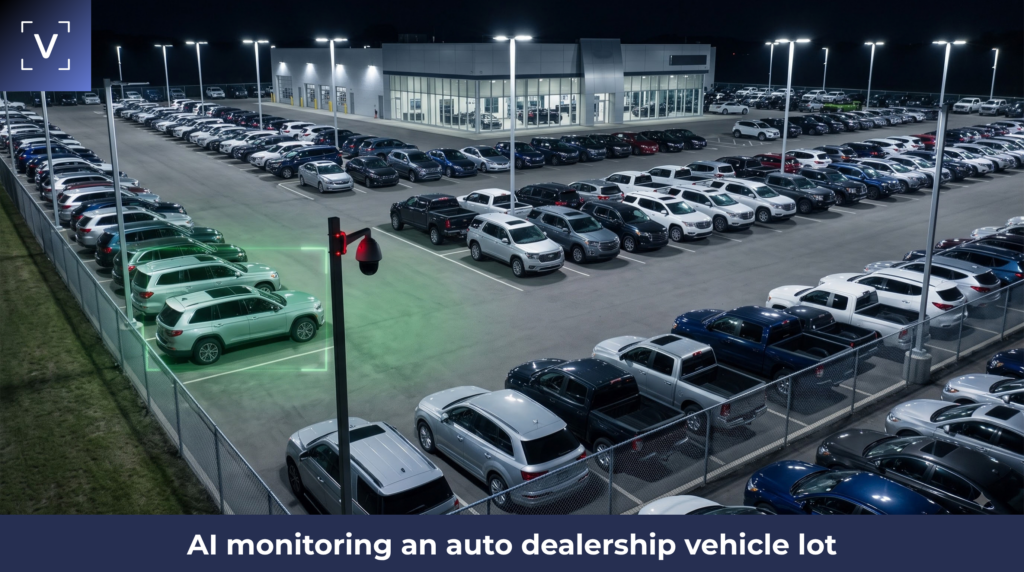
For example, a dealership could configure its system to detect movement inside a vehicle lot during restricted hours.
If activity occurs at 2:30 AM, the system can flag the event and send it to a security team or remote monitoring operator for review.
This changes surveillance from simply recording incidents to helping security teams respond to them as they occur
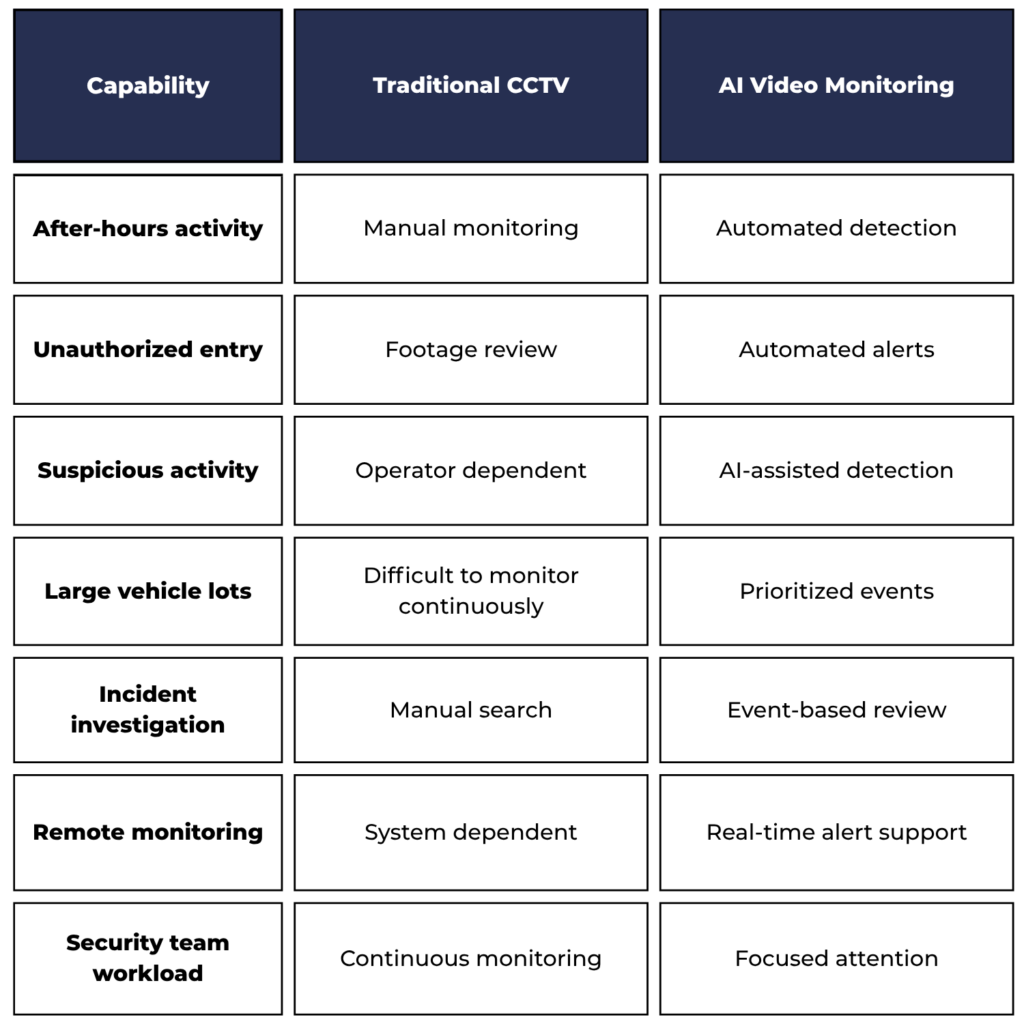
AI surveillance does not guarantee that a vehicle theft will be prevented. Its value comes from helping security teams identify relevant activity earlier.
Consider a dealership with 300 vehicles operating across a large lot.
During normal business hours, hundreds of people may move around the property. At night, however, the same movement patterns can become unusual.
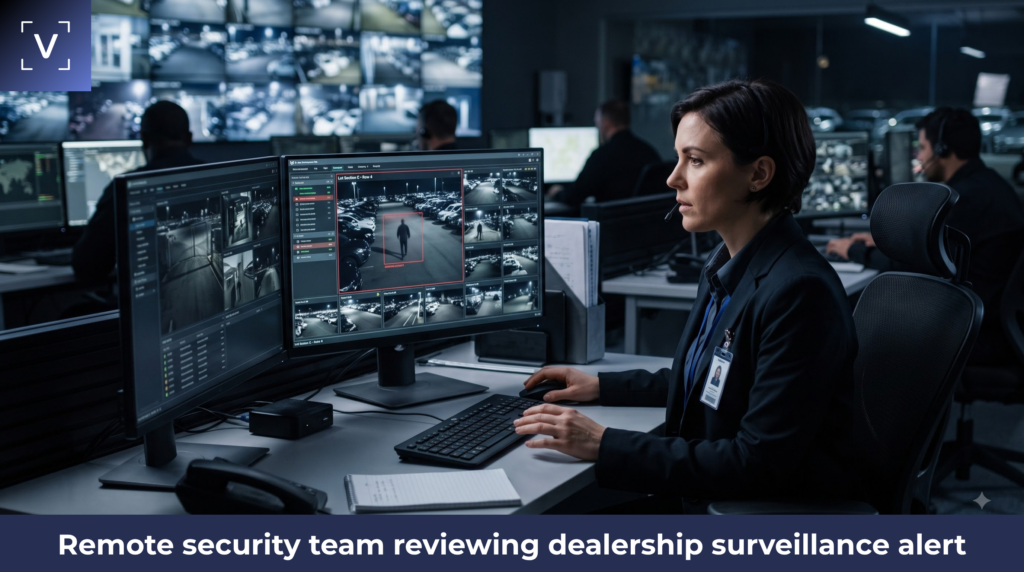
If someone enters a restricted vehicle area after closing, AI video analytics can identify the activity and generate an alert. A remote monitoring operator can then review the event and follow the dealership’s response procedures.
The earlier the security team becomes aware of an unauthorized event, the more opportunity there may be to investigate and respond before the situation develops further.
AI detection and human monitoring can work together.
AI can identify potentially important events, while remote video monitoring operators can verify what is happening and escalate confirmed incidents according to established procedures.
This is particularly useful for dealerships that do not have security personnel physically present 24/7.
Instead of receiving alerts for every movement, teams can focus attention on events that meet specific security rules.
Vehicle theft is not the only security concern at a dealership.
The same video surveillance systems can support monitoring around:
This gives dealerships a broader security layer without requiring separate surveillance systems for every area.
Before deploying AI video monitoring, dealerships should identify their highest-risk areas and define what events should generate alerts.
Camera placement, lighting, network connectivity, retention requirements, privacy considerations, and response procedures all affect how effective the system can be.
The technology should also complement existing security processes rather than operate independently.
Auto dealerships manage valuable inventory across large, difficult-to-monitor properties. Traditional CCTV provides important video evidence, but AI video monitoring can add automated detection and faster awareness of potentially suspicious activity.
By combining AI video analytics, security surveillance cameras, and remote video monitoring, dealerships can move toward a more proactive security model.
The goal is not to rely on cameras alone to stop theft. It is to detect relevant activity earlier, bring it to the attention of security teams, and support a faster response when something unusual happens.