



Video surveillance is moving closer to where events actually happen. Instead of sending every camera stream to a central server, businesses are increasingly using cameras with built-in processing capabilities. This shift toward edge computing is changing how video surveillance systems handle AI video analytics, security surveillance, and real-time monitoring.
For warehouses, retail stores, manufacturing plants, campuses, and multi-site businesses, smarter cameras can process important events locally, reducing dependence on large on-site servers and constant video transmission.
Edge computing means processing video data closer to the camera instead of sending everything to a centralised server for analysis.
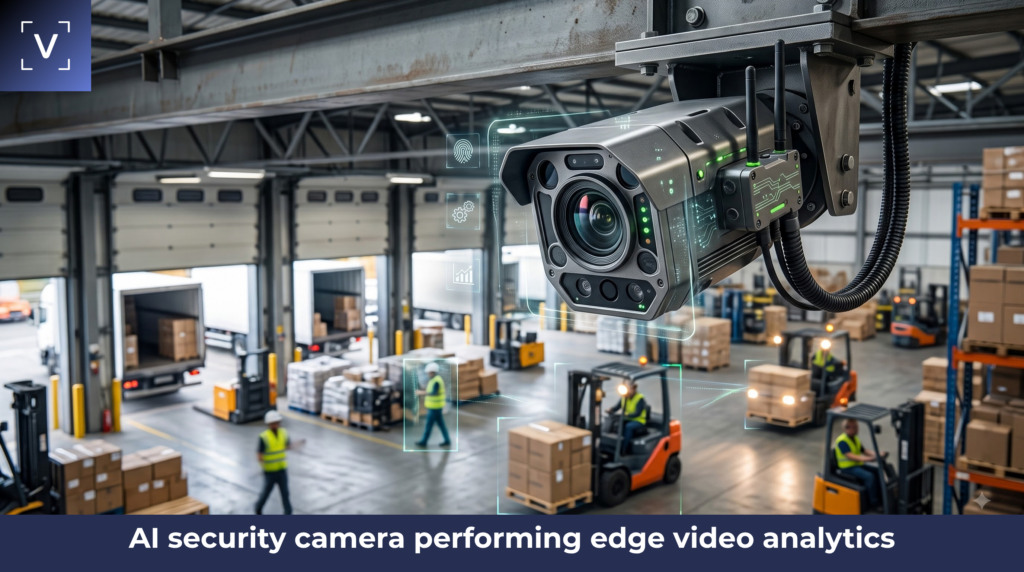
Traditional video surveillance systems often rely on cameras sending continuous video streams to NVRs, DVRs, or dedicated servers. With edge-based systems, the camera itself can perform tasks such as motion detection, people counting, intrusion detection, or other AI-based analysis.
This allows video surveillance systems to identify relevant events closer to their source.
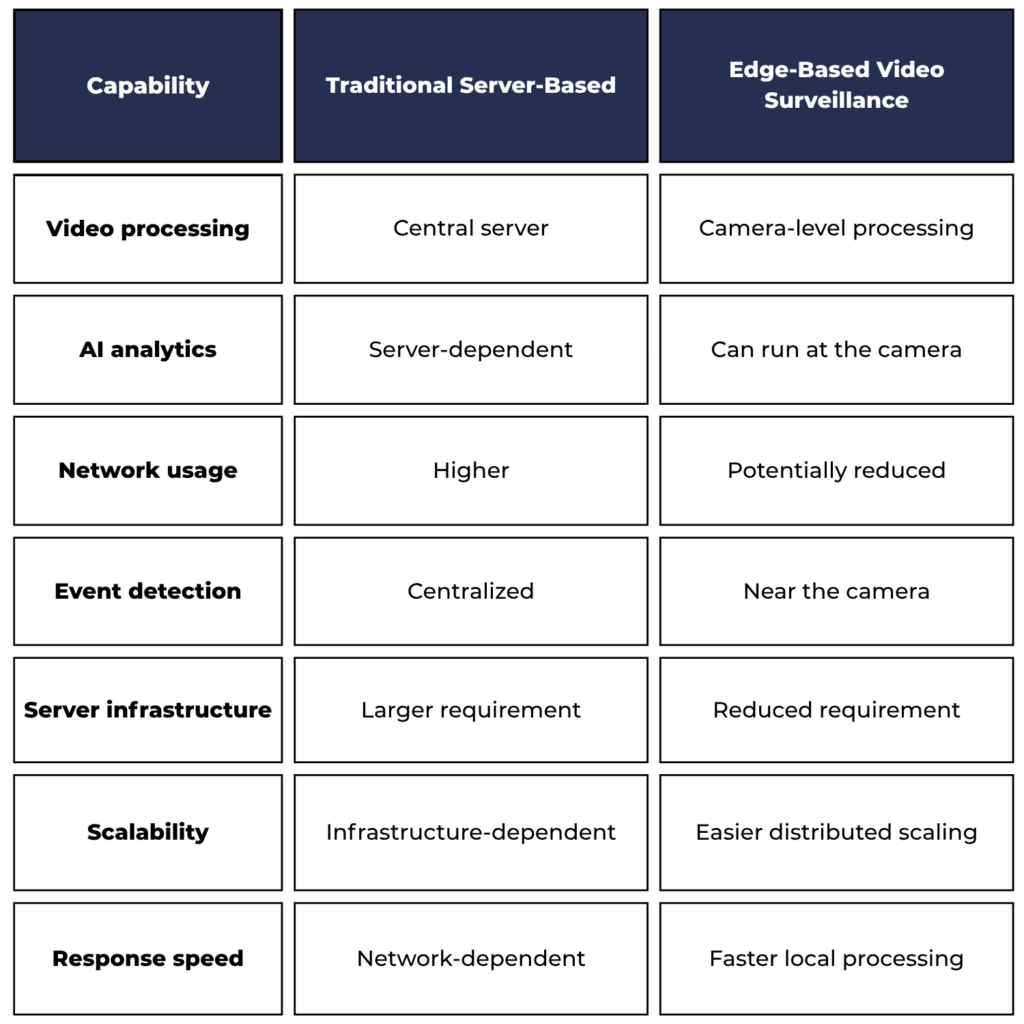
A large facility can have hundreds of cameras operating 24/7. Sending every stream to centralised servers creates significant requirements for network bandwidth, storage, and processing capacity.
Edge computing can reduce that workload by analyzing video locally and sending only relevant events, metadata, or selected footage to a central platform.
For businesses using security surveillance cameras across multiple facilities, these differences can become increasingly important as camera counts grow.
Consider a logistics facility operating more than 500 cameras across loading docks, storage areas, entrances, and restricted zones.
With a traditional architecture, continuous video streams may need to travel to centralized servers for processing and recording. As the facility expands, additional cameras can increase infrastructure and bandwidth requirements.
With edge-based AI video analytics, cameras can analyze events locally. For example, if a person enters a restricted zone at 2:15 AM, the camera can identify the event and generate an alert without requiring every frame from every camera to be continuously processed by a central server.
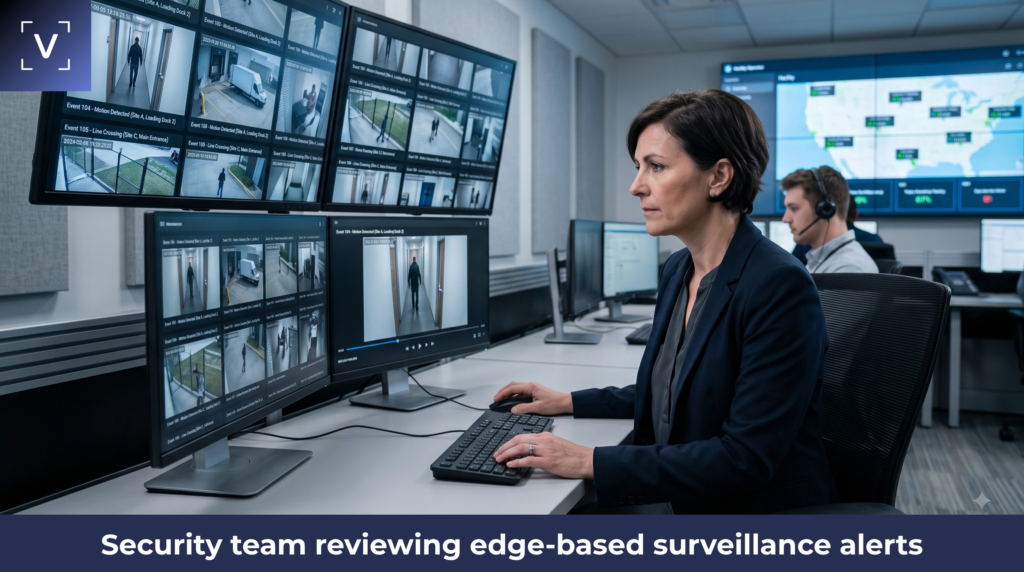
Security teams can then focus on relevant events instead of manually reviewing hundreds of camera feeds.
Edge computing is particularly useful when video surveillance needs to identify events in real time.
AI surveillance cameras can potentially analyze activities such as:
Instead of treating all video as equally important, edge processing can help prioritize events that require attention.
This is especially useful for remote video monitoring operations where security teams may oversee multiple locations simultaneously.
Traditional surveillance infrastructure can require dedicated servers, storage systems, networking equipment, and cooling capacity.
Edge architecture does not necessarily eliminate all centralized infrastructure. Instead, it can reduce how much processing needs to happen centrally.
That can make deployments more flexible, particularly for smaller sites, remote facilities, and businesses managing dozens of locations.
Edge computing is not simply about replacing one piece of hardware with another. Businesses should consider camera processing capabilities, storage requirements, cybersecurity, network architecture, software compatibility, and how AI models will be updated and managed.
Organizations also need to determine which analytics should run locally and which workloads are better handled centrally.
A hybrid approach can combine edge processing with centralized video management and cloud-based monitoring.
Edge computing is changing the architecture of modern video surveillance. By moving more processing directly to cameras, businesses can reduce network dependence, improve event detection speed, and scale intelligent surveillance across larger environments.
For organizations operating hundreds of cameras or multiple locations, the combination of edge computing, AI video analytics, and centralized monitoring can create a more efficient security surveillance model.
The future of video surveillance is not necessarily about building bigger server rooms. It is about making cameras smarter, processing information closer to the source, and sending security teams the information that actually matters.