




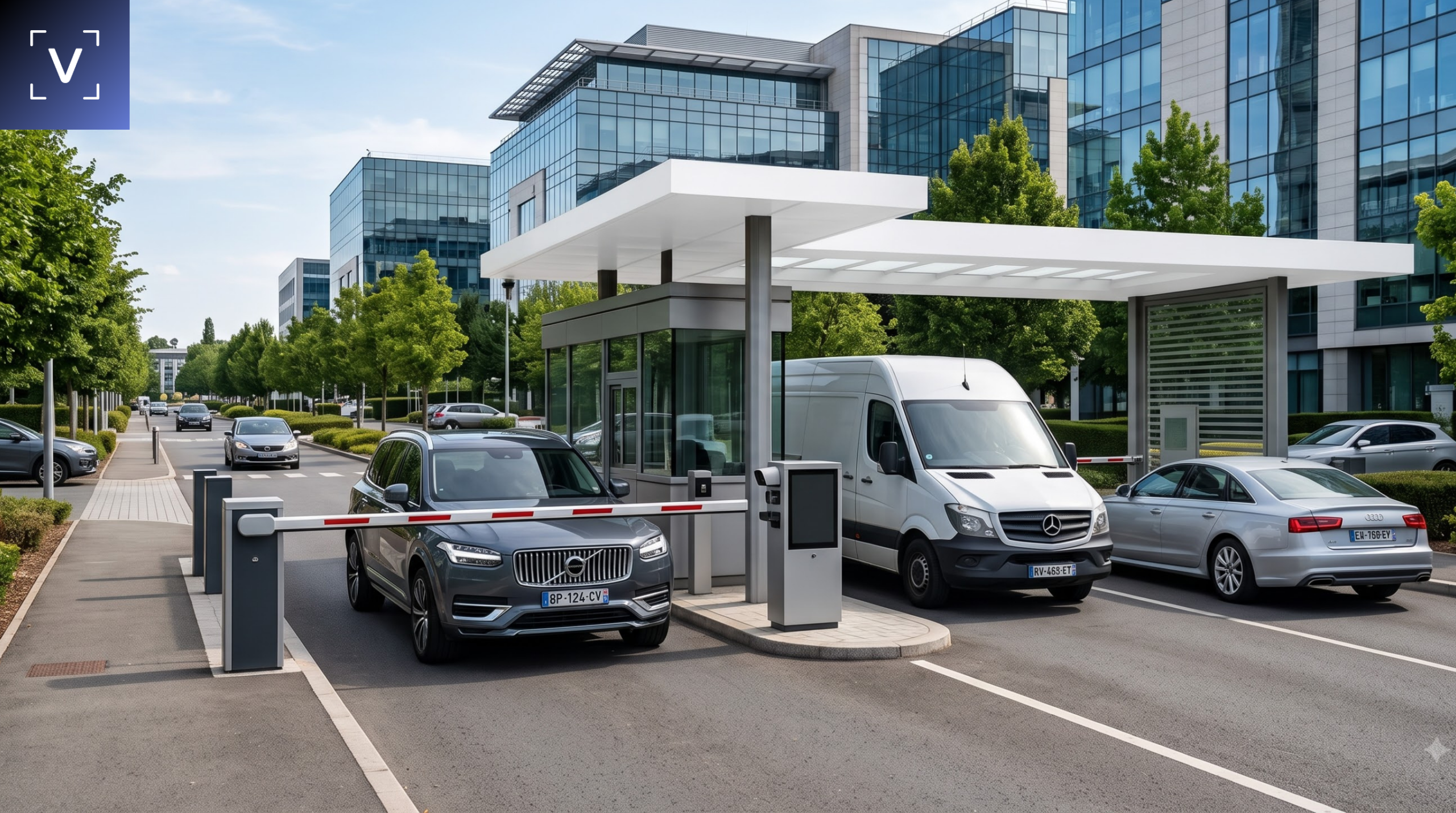
Managing vehicle access has become increasingly important for commercial properties, warehouses, residential communities, parking facilities, and industrial sites in 2026. Traditional access control methods such as security guards, access cards, and manual vehicle checks can create delays while making it difficult to maintain consistent security. Organizations are increasingly adopting license plate recognition (LPR), security surveillance cameras, video surveillance systems, and CCTV monitoring services to automate vehicle identification and improve access control.
Modern LPR technology uses cameras and intelligent video analytics to identify vehicle license plates in real time. By connecting plate recognition with access control systems, businesses can verify authorized vehicles, monitor entry and exit activity, and respond quickly to suspicious or unauthorized vehicle access.
Why Traditional Vehicle Access Control Has Limitations
Traditional vehicle access methods often depend on security personnel manually checking vehicles, access cards, visitor lists, or identification documents. While these methods can provide basic protection, they may become difficult to manage when facilities handle large numbers of vehicles throughout the day.
Common challenges include:
For busy commercial properties and logistics facilities, even a short delay at an entrance can affect traffic flow and daily operations. Organizations therefore need access control solutions that improve both security and efficiency.
How License Plate Recognition Works
License plate recognition systems use specialized cameras and AI-powered image processing to capture and identify vehicle license plates as vehicles approach an entrance or exit.
The process generally involves:
When integrated with video surveillance systems and CCTV monitoring services, LPR can provide security teams with real-time information about vehicle activity across a property.
Key Benefits of LPR for Smart Vehicle Access
License plate recognition can improve vehicle access management in several ways.
Faster Vehicle Identification
LPR systems can identify vehicles automatically, reducing the need for manual checks and helping traffic move more efficiently through entrances.
Improved Security
Organizations can create authorized vehicle lists and receive alerts when unrecognized or restricted vehicles attempt to enter protected areas.
Better Access Records
Every recognized vehicle can generate an electronic entry or exit record, giving property managers greater visibility into vehicle activity.
24/7 Monitoring
LPR systems can operate continuously, supporting vehicle access monitoring during business hours, overnight periods, and weekends.
Reduced Manual Work
Automated vehicle identification allows security personnel to focus on unusual situations rather than checking every vehicle individually.
Better Operational Visibility
Businesses can use LPR data to understand traffic patterns, monitor parking activity, and improve access management across multiple entrances.
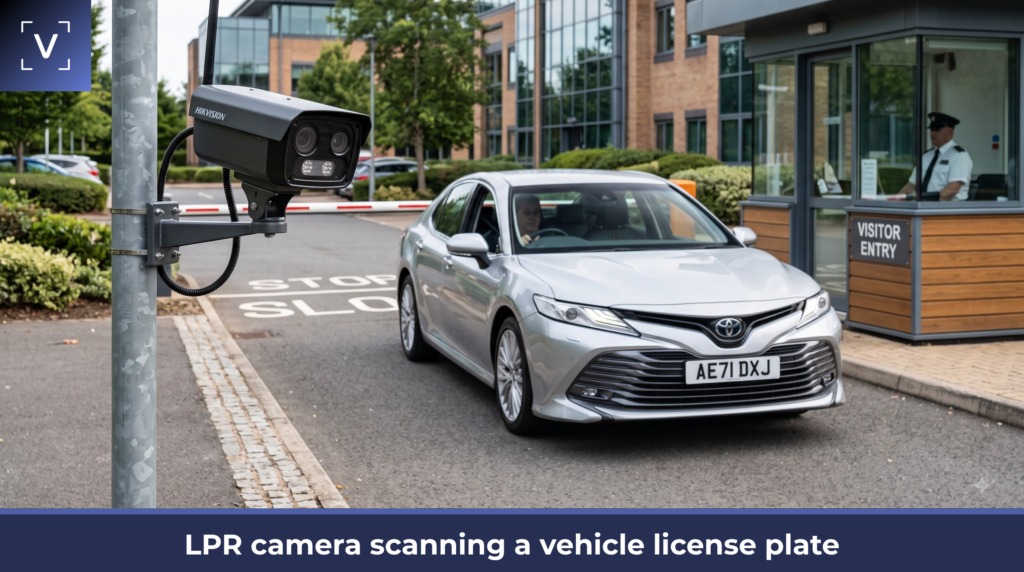
As vehicle traffic continues to increase across commercial properties and logistics facilities, LPR provides a practical way to combine automated identification with intelligent security surveillance. When connected with AI video analytics and remote monitoring, these systems can make vehicle access faster, more consistent, and easier to manage.
A Real-World Example of LPR for Vehicle Access
Imagine a commercial business park with more than 500 vehicles entering and leaving each day. During busy morning hours, security personnel manually verify vehicle details at the entrance, creating queues and increasing the possibility of verification errors.
With license plate recognition, an LPR camera automatically identifies each vehicle as it approaches the gate. Authorized plates are verified against the access list, while unrecognized vehicles can trigger an alert for security personnel. Entry and exit activity is also recorded automatically, giving property managers better visibility without requiring every vehicle to be checked manually.
This example shows how LPR can improve both security and traffic flow while reducing the workload on security teams.
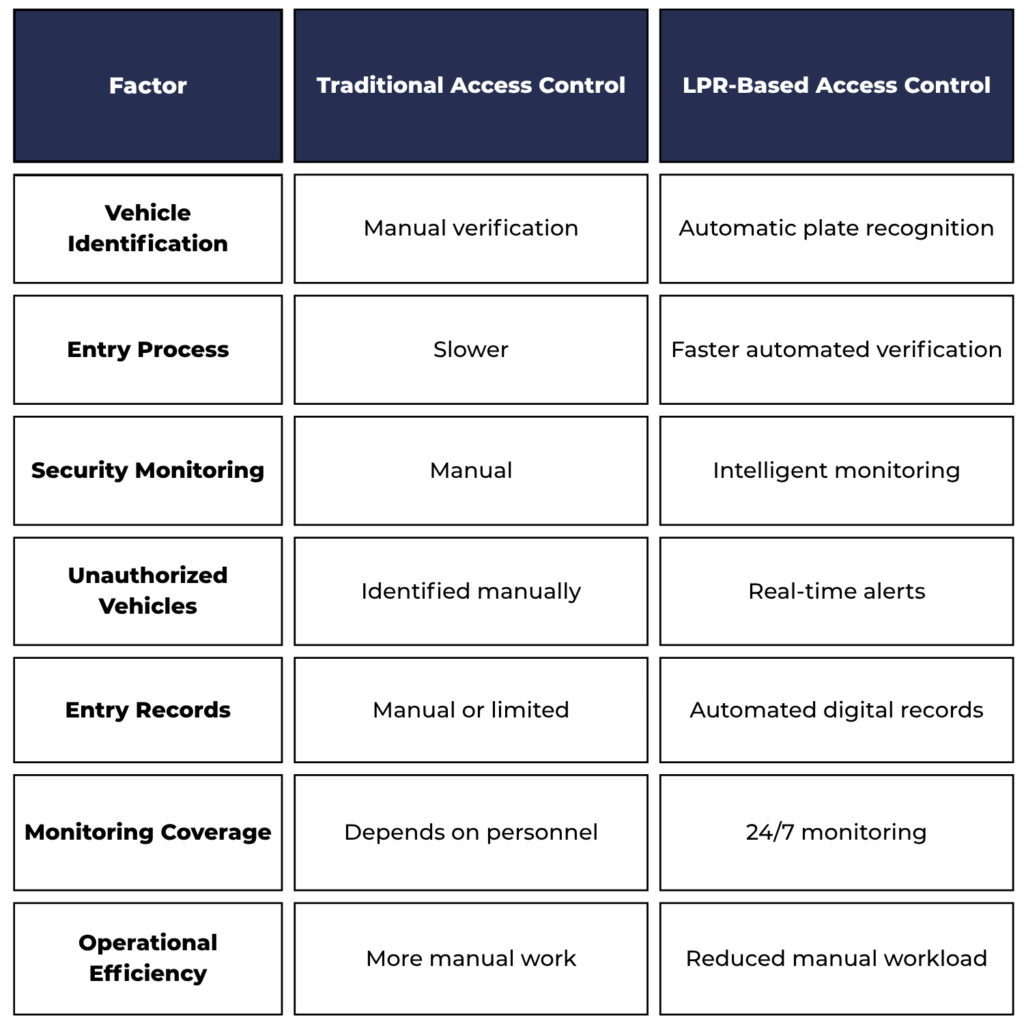
Traditional Vehicle Access Control vs. LPR
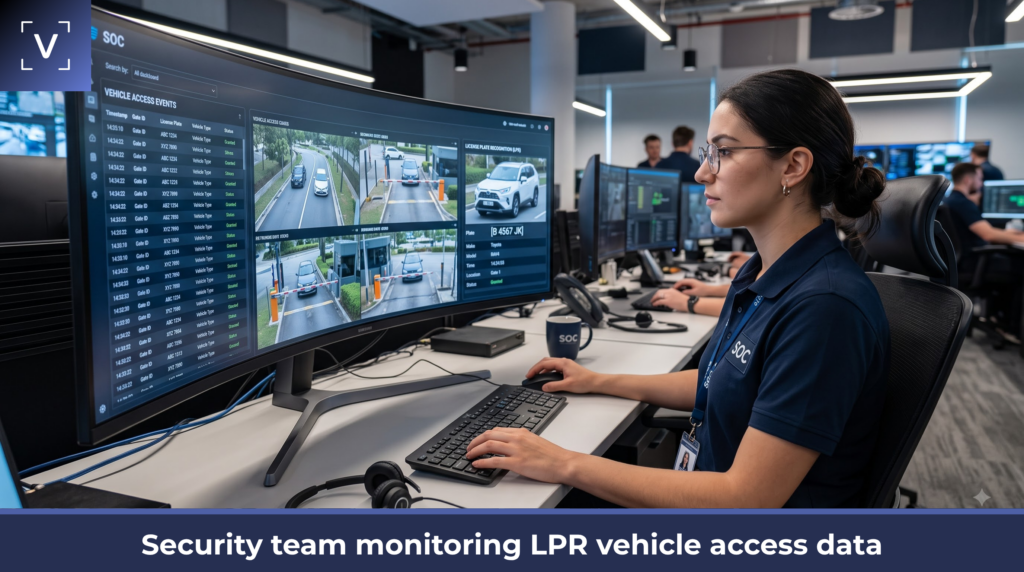
LPR becomes even more effective when integrated with security surveillance cameras, video surveillance systems, and CCTV monitoring services. Security teams can combine license plate information with video footage to investigate vehicle-related incidents more efficiently.
For example, if an unauthorized vehicle enters a restricted area, security personnel can quickly review the associated camera footage and access record. This combination of automated identification and visual verification provides stronger situational awareness than relying on manual checks alone.
As commercial properties, logistics facilities, residential communities, and industrial sites become more connected, vehicle access systems are moving toward greater automation.
Future solutions will increasingly combine LPR with AI video analytics, cloud-based monitoring, remote security operations, and integrated access control platforms. These technologies can help organizations manage larger volumes of vehicle traffic while maintaining consistent security standards.
Smart access control can also support parking management, visitor management, restricted-area monitoring, and centralized security operations across multiple locations.
License plate recognition is transforming vehicle access from a manual process into a smarter and more automated security operation. By combining LPR with AI video analytics, security surveillance cameras, video surveillance systems, and CCTV monitoring services, organizations can improve vehicle identification, strengthen access security, reduce delays, and maintain better operational visibility.
As businesses continue adopting smarter security technologies in 2026, LPR is becoming an important component of modern vehicle access control.