

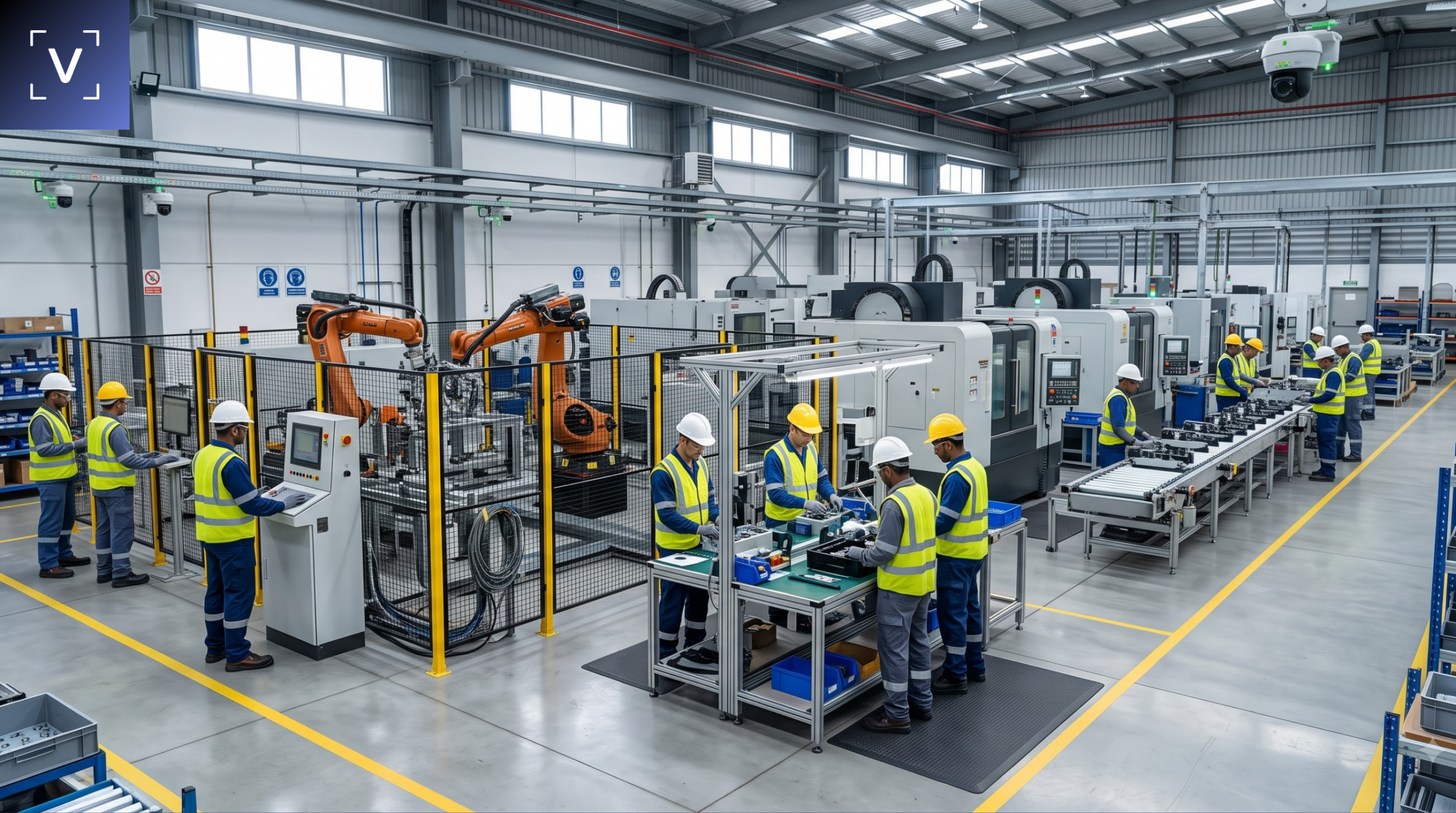
Businesses in 2026 are facing increasing pressure to maintain safer workplaces and demonstrate compliance with safety requirements. Traditional security surveillance cameras and video surveillance systems can provide valuable footage, but they often depend on manual observation and inspections to identify safety violations. AI video analytics is helping organizations move toward proactive safety monitoring by analyzing live video and identifying potential risks in real time.
By combining AI surveillance cameras, intelligent video analytics, and CCTV monitoring services, businesses can monitor workplace conditions continuously, identify safety violations earlier, and provide better visibility into compliance-related activities.
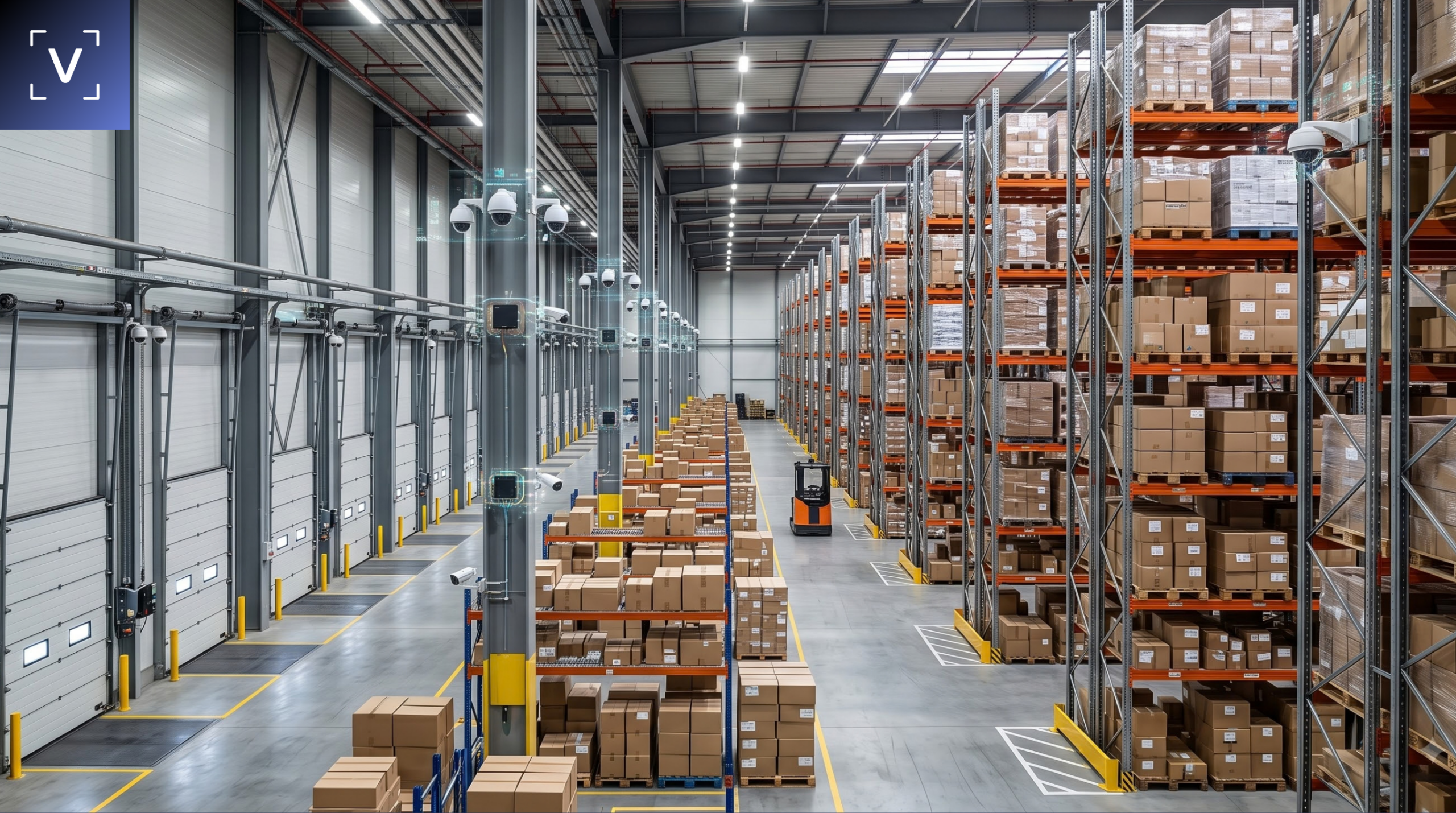
Maintaining safety standards across large or busy facilities can be difficult. Manufacturing plants, warehouses, construction sites, commercial properties, and other workplaces may have employees working across multiple areas and shifts.
Common safety challenges include:
Manual inspections can identify some of these issues, but they may not provide continuous coverage. A safety violation that occurs between inspections can remain unnoticed until it creates a larger risk.
AI-powered video surveillance provides an additional layer of continuous monitoring that helps businesses identify these conditions more quickly.
AI video analytics analyzes live footage from security surveillance cameras and identifies activities that may violate predefined safety rules.
For example, AI systems can monitor whether employees are wearing required protective equipment, entering restricted areas, or following designated movement paths. When a potential violation is detected, the system can generate an alert for supervisors or remote monitoring teams.
This allows businesses to address safety concerns while they are occurring rather than discovering them during a later inspection or after an incident.
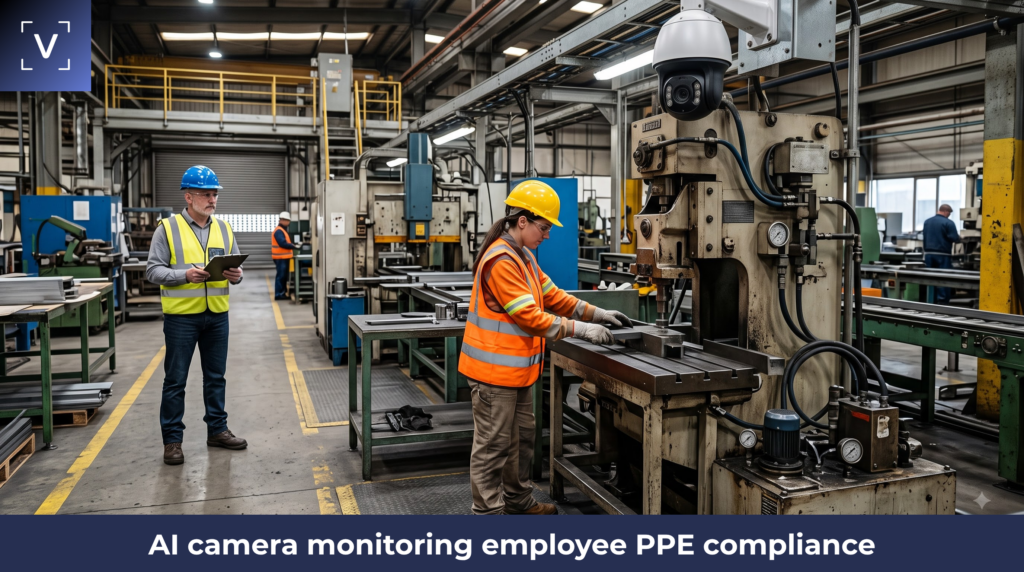
Personal protective equipment is an important part of workplace safety in many industrial environments. However, manually checking PPE compliance across a facility can be difficult, particularly when hundreds of employees work across multiple shifts.
AI surveillance cameras can help identify missing safety helmets, reflective vests, or other required protective equipment. Alerts can then notify supervisors when a potential violation is detected.
Continuous monitoring helps organizations identify recurring compliance issues, reinforce safety procedures, and maintain greater visibility across high-risk work areas.
AI video analytics can also help identify conditions that may contribute to workplace accidents. Systems can monitor areas for blocked emergency exits, unsafe movement around machinery, restricted-area access, and other potentially hazardous activities.
Early detection gives safety teams an opportunity to investigate and correct the issue before it results in an injury, equipment damage, or operational disruption. This proactive approach supports a stronger safety culture while complementing existing inspections and compliance procedures.
AI video analytics can help businesses maintain continuous visibility across safety-critical areas while supporting existing compliance programs. Instead of relying only on periodic inspections, organizations can use AI surveillance cameras to monitor activities throughout the day and identify potential violations as they occur.
This creates a more proactive approach to safety management. Supervisors can receive alerts, investigate incidents, and take corrective action faster while maintaining a clearer record of recurring safety concerns.
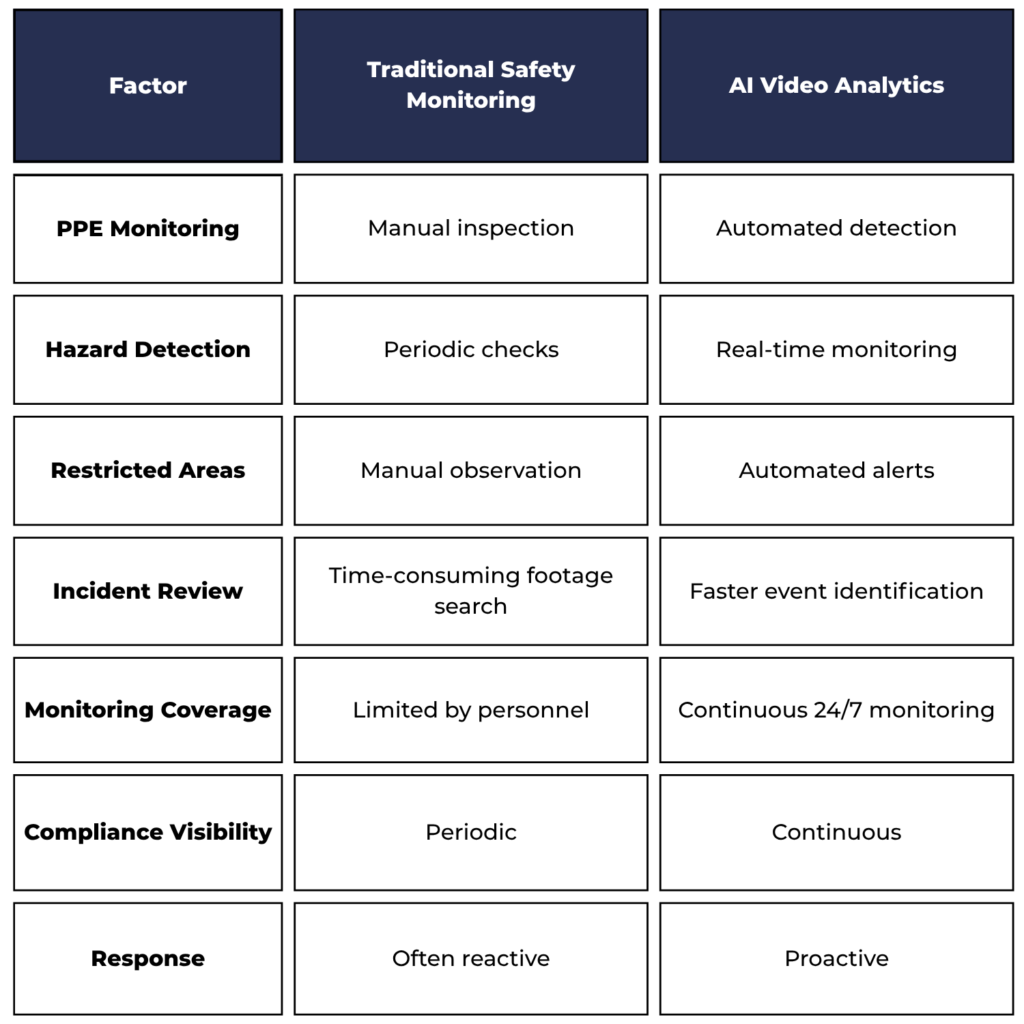
Organizations using AI-powered monitoring can gain several advantages:
AI does not replace safety policies, inspections, or human judgment. Instead, it provides an additional monitoring layer that helps teams identify potential issues earlier and make better-informed safety decisions.
As businesses continue adopting intelligent security surveillance systems, AI video analytics will play a larger role in proactive safety management. AI surveillance cameras, video surveillance systems, remote video monitoring, and CCTV monitoring services can provide organizations with greater visibility across multiple facilities and operating shifts.
Future systems will increasingly help businesses identify patterns in safety violations and recurring hazards, allowing organizations to focus on prevention rather than simply documenting incidents.
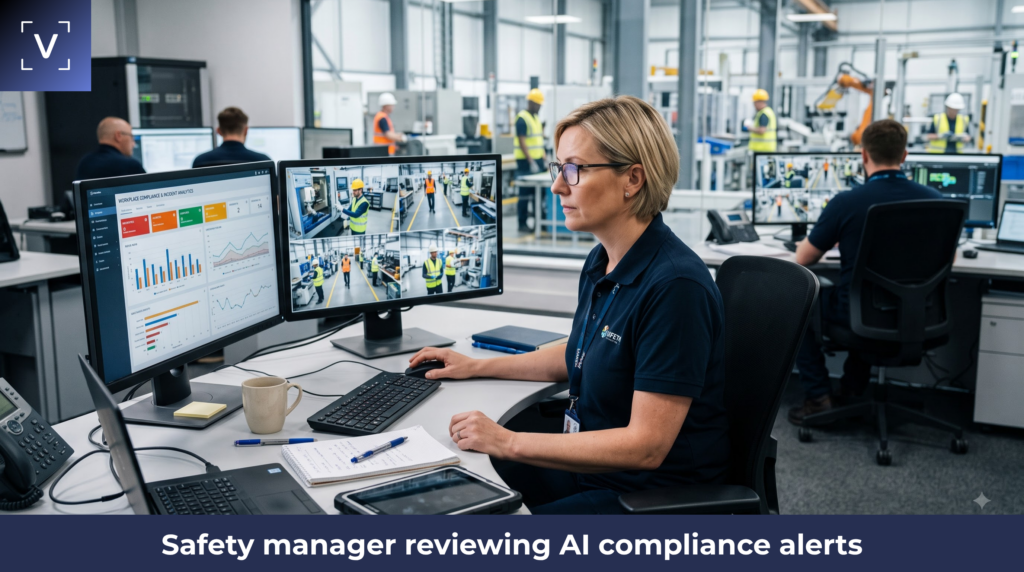
Meeting safety compliance standards requires more than periodic inspections and recorded CCTV footage. By combining AI video analytics, AI surveillance cameras, video surveillance systems, and CCTV monitoring services, businesses can monitor safety conditions continuously, identify violations earlier, and respond more effectively.
In 2026, AI-powered safety monitoring is becoming a valuable tool for organizations looking to strengthen compliance, protect employees, and build safer, more proactive workplaces.