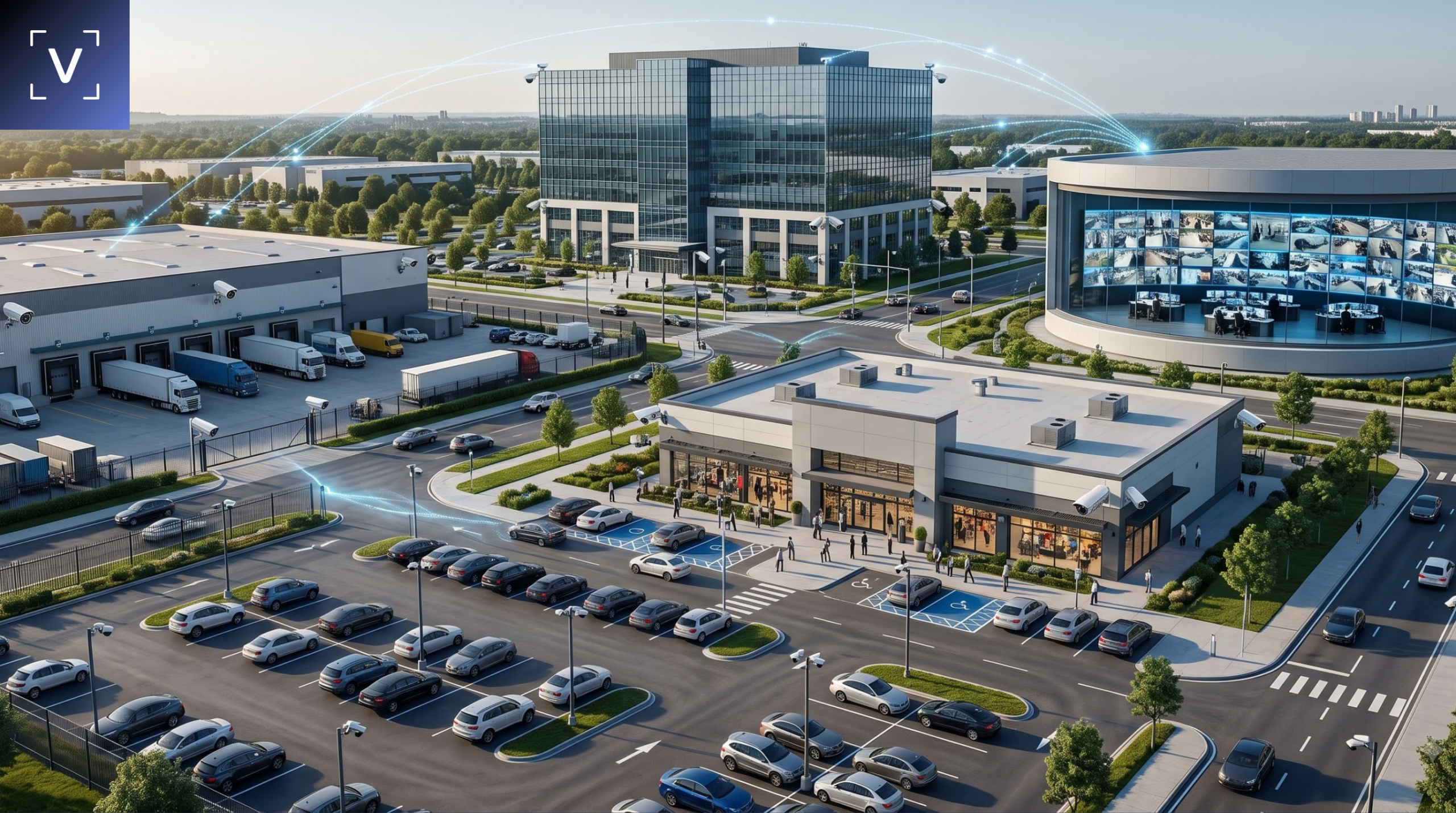


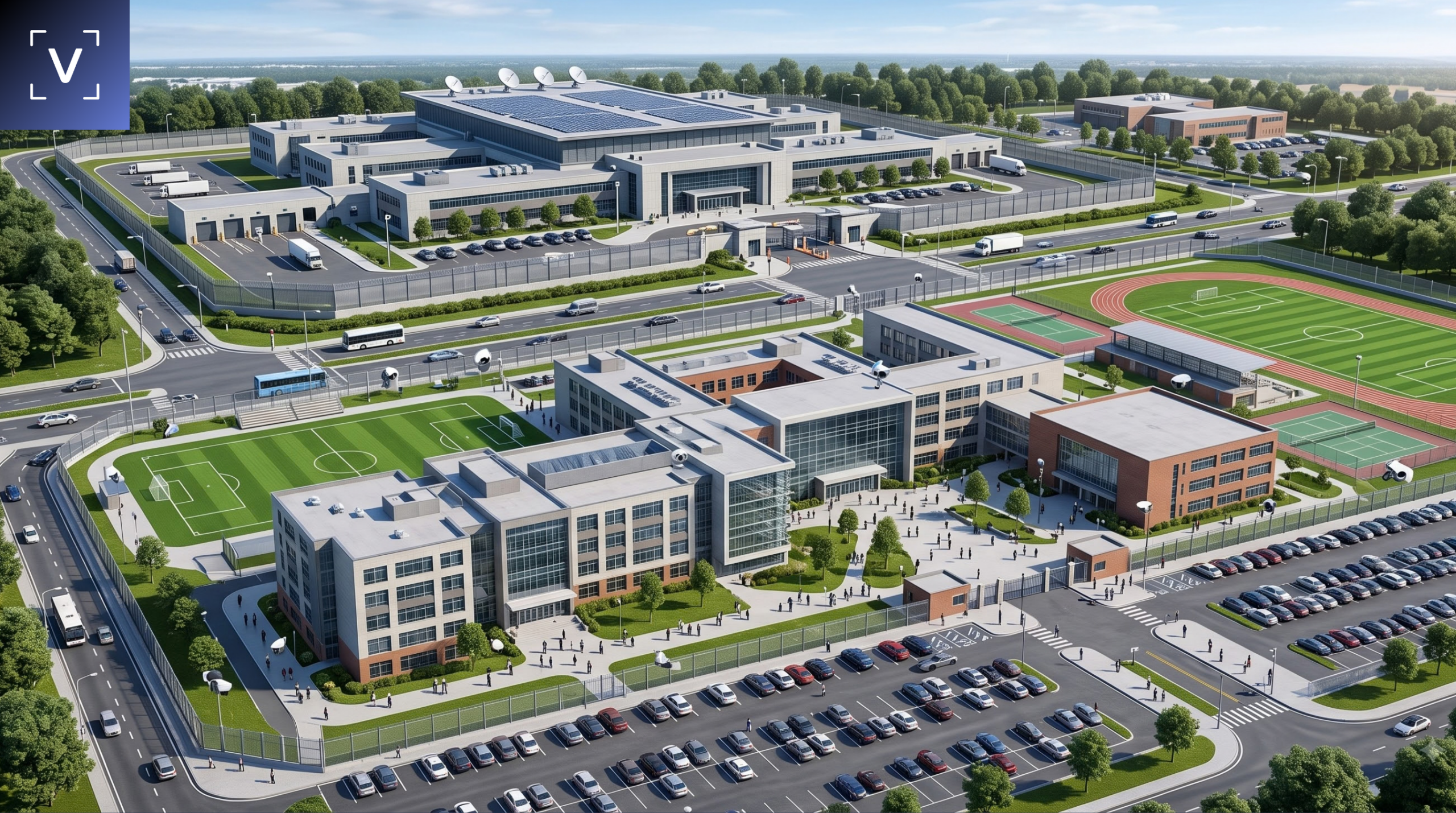

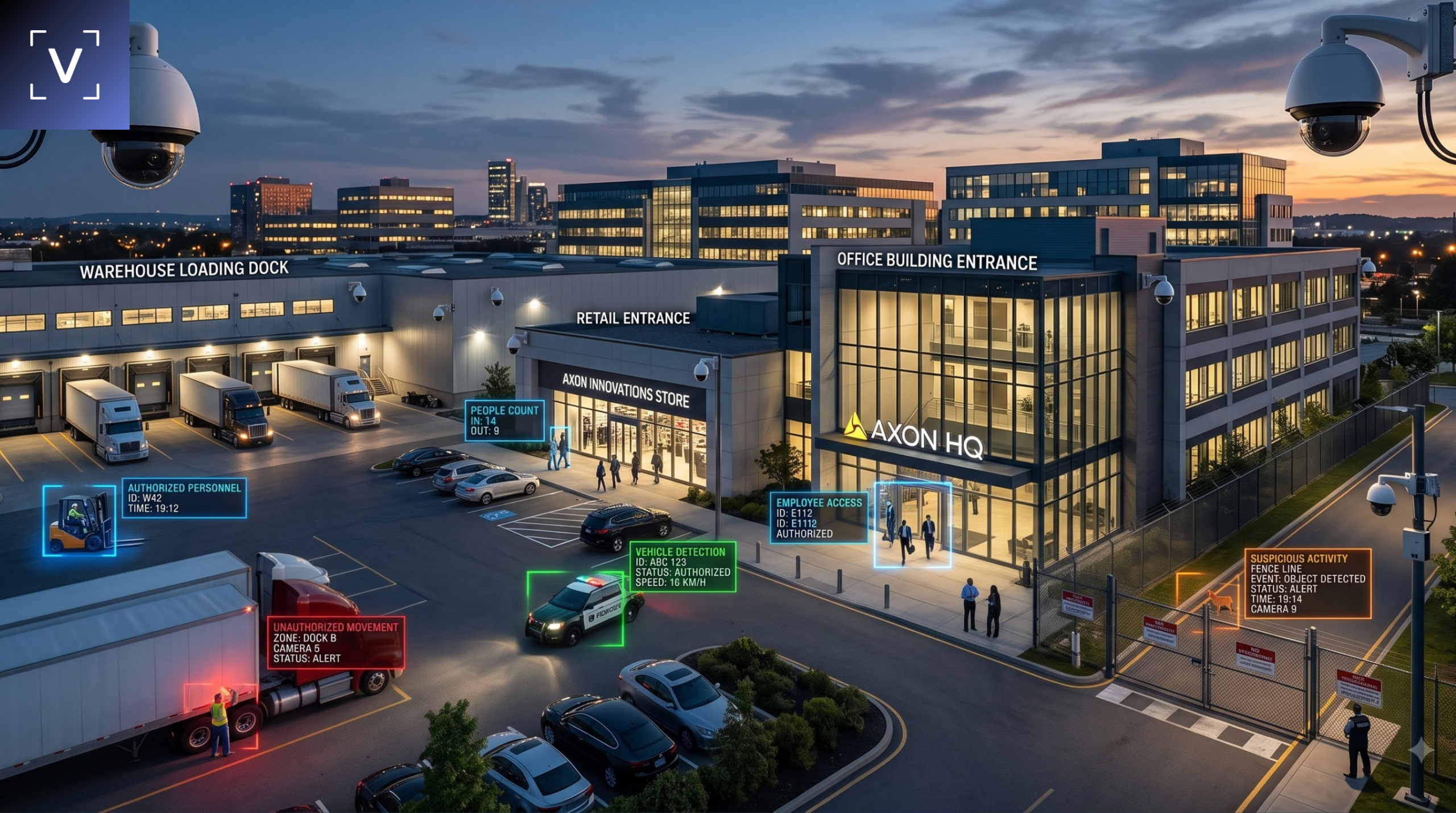
Business security is moving beyond cameras that simply record what happened. In 2026, AI video analytics can analyse live footage, identify people, vehicles, objects and behaviours, and generate alerts when defined events occur.
For businesses managing retail stores, warehouses, offices, manufacturing plants and commercial properties, the value is identifying important events faster and directing attention where it matters
1. Real-Time Intrusion Detection
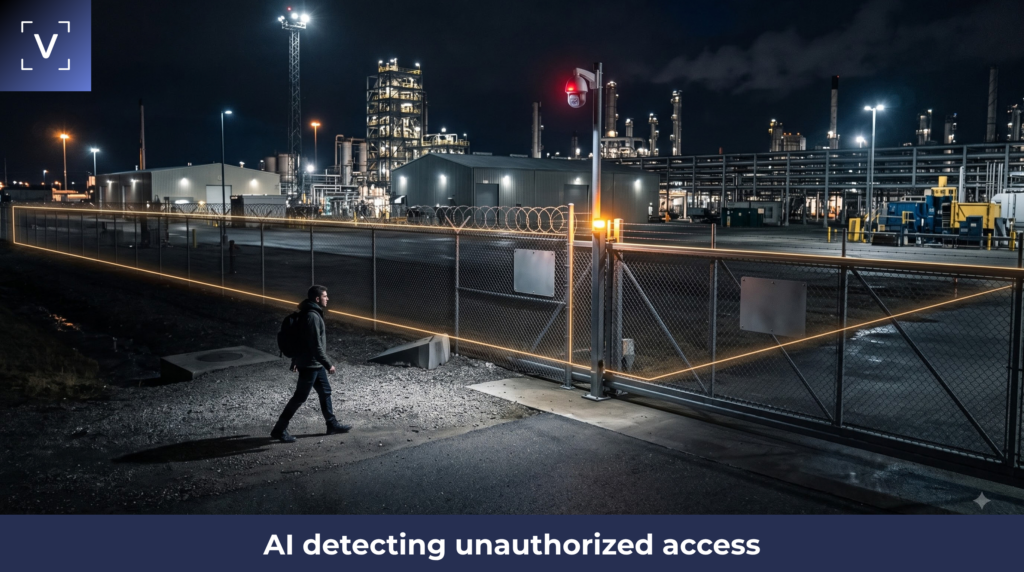
Traditional CCTV records someone entering a restricted area, but security teams may discover the event later. AI video analytics can detect people entering defined zones and trigger alerts when activity violates configured rules.
This is useful for warehouses, campuses and commercial properties
2. Unauthorised Access Monitoring
AI-powered security surveillance can monitor restricted rooms, entrances and sensitive areas. When someone enters a designated zone without authorisation, the system can alert security personnel.
This is particularly useful in manufacturing plants, data centres and warehouses
3. License Plate Recognition
License plate recognition can connect vehicle activity with security workflows. AI can identify plates at gates and entrances, helping businesses monitor approved vehicles and investigate unfamiliar vehicles.
For logistics facilities with frequent vehicle traffic, this adds another security layer.
4. Suspicious Activity Detection
AI video analytics can identify predefined behaviours such as unusual movement, loitering or activity in unexpected areas.
Instead of watching every CCTV feed continuously, security teams can focus on events matching configured rules.
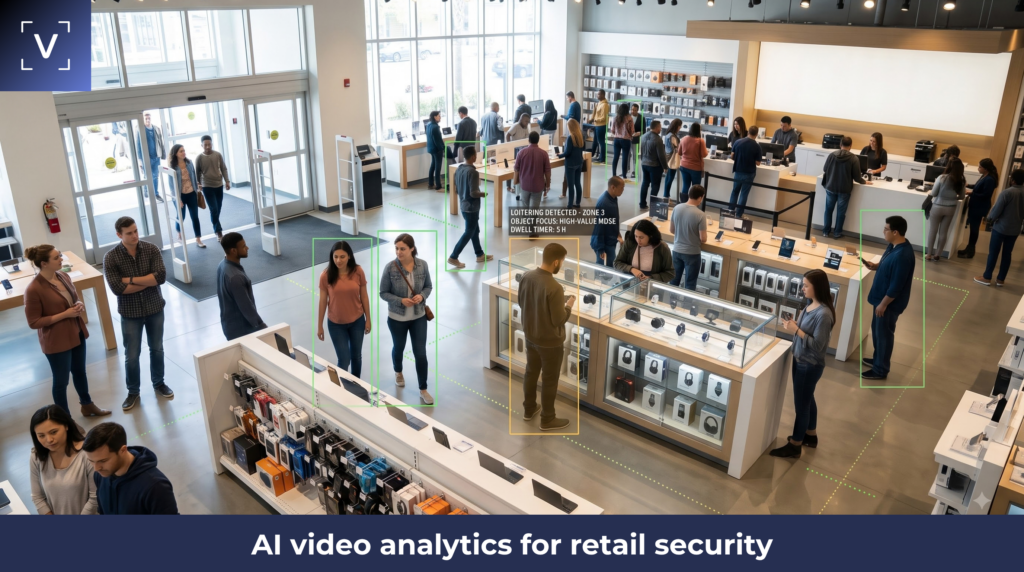
5. Theft and Loss Prevention
Retail businesses can use AI surveillance cameras to identify suspicious activity around merchandise, checkout areas and restricted zones.
Video analytics can also support footfall and queue monitoring
6. Employee Safety Monitoring
AI video analytics can detect PPE violations, unsafe behaviour and restricted-zone activity in industrial environments.
Manufacturing facilities can use AI to monitor safety equipment and movement around hazardous machinery.
7. Crowd and Occupancy Monitoring
Businesses can use AI-powered video surveillance to understand how many people are entering, leaving or occupying particular areas.
Retail stores and commercial buildings can use this information to identify overcrowding and manage queues.
8. Vehicle and Forklift Monitoring
Warehouses and industrial facilities can use AI video analytics to monitor forklifts, vehicles and pedestrian zones.
The system can identify vehicles entering defined areas or detect movement that violates configured safety rules.
9. Fire, Smoke and Safety Alerts
AI video analytics can provide another visual layer for identifying fire and smoke events. This can complement existing fire and safety systems by helping teams identify visible hazards through cameras.
10. Faster Incident Investigation
AI can make recorded footage easier to search and investigate.
Instead of manually reviewing hours of video, security teams can use intelligent search and event-based filtering to locate relevant people, vehicles or activities.
Consider a large warehouse operating 24/7 with 100+ cameras covering entrances, loading docks, parking areas and restricted zones.
AI video analytics can continuously monitor defined events. An unauthorised person entering a restricted loading area at 2:15 AM could trigger an alert, while vehicle analytics tracks gate activity and safety analytics monitors forklift and pedestrian zones.
The same system can help security teams search recorded footage for specific people, vehicles or events
Traditional CCTV vs. AI Video Analytics
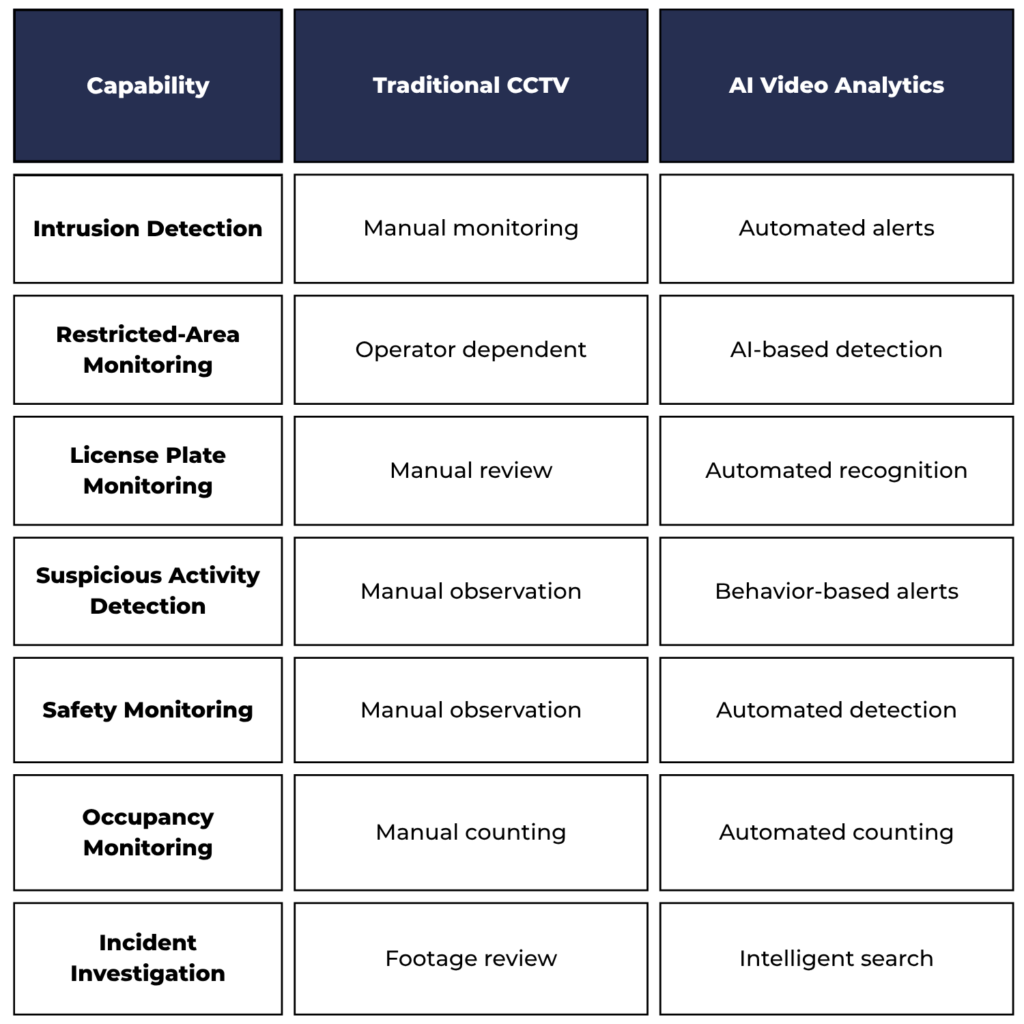
The key difference is how security teams interact with video. Instead of treating every camera feed equally, analytics can identify events matching predefined rules and bring them to the operator’s attention.
The strongest use cases combine security with operational value. A warehouse can use cameras for intrusion detection, vehicle monitoring and safety-zone compliance. A retail business can combine loss prevention with people counting and queue analytics.
Implementation also matters. AI cannot compensate for poor camera positioning, unsuitable lighting or badly configured detection rules. Businesses need to match each analytic to the environment and define the appropriate response.
The Bottom Line
AI video analytics is changing business security from passive recording toward proactive detection and investigation.
From intrusion detection and license plate recognition to employee safety, occupancy monitoring and intelligent video search, businesses can use their camera infrastructure for more than simply recording footage.
In 2026, businesses can focus on the security and operational problems that matter most and deploy the right analytics to address them.